Guest blog by Benjamin Campbell, author of
Richmond's Unhealed History.
The received history of Virginia, as taught in our public and private schools, our museums, our public sites and monuments, and even in our universities, has had a strange, orthodox, doctrinal quality to it. Sometimes – often – it seems comprised of a few great men, a few great ideals, a few great monuments, a lot of street signs, and some commemorative stamps, repeated over and over. Everything else is seen as a footnote, if mentioned at all.
The theft of native lands and decimation of 90% of the population of pre-European Tsenacomoco is taught as an exciting colonial adventure. The enslavement, torture, sale, and resale of 90% of the first white Europeans brought to the colony from 1607 to 1650 is unmentioned. The exportation of all of London’s convicted felons to Virginia and Maryland during the 18th Century is unknown. The revolution which sent 50% of the population into slave labor is described as a successful birth of freedom. And the second largest slave market in America, from which 300,000 or more African Virginians were ripped from their families and shipped into slave labor camps, is buried underground, not even a footnote in approved textbooks.
It is not that the untold stories are completely unknown. They are just not known in Virginia, and never have been. Richmond’s slave market was well described in the London Illustrated News in the mid-19th century. It was described in an excellent chapter in Frederic Bancroft’s classic
Slave Trading in the Old South, first published in 1931; in William Still’s
The Underground Rail Road, published in 1872; in Eyre Crowe’s
With Thackeray in America, published in 1892; and in Charles Emery Stevens’
Anthony Burns: A History, published in 1856. The stories of the earlier Virginia Colony are well-documented – everybody has the same documents – but they are told in a triumphant European way, devoid of balance or historical perspective.
The work of Ed Ayers and Philip Schwarz, some good work at the Virginia Historical Society, and the recent exhibition on slavery at the Library of Virginia, along with a lot of unpublished work on the Burial Ground and Slave Trail in Richmond, are just beginning to unsettle the mythology of our city and state. The tarnishing of the fantasy has been supported by several national publications of note, including the movie version of
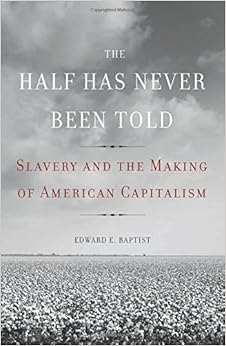
Twelve Years a Slave and Edward Baptist’s recently published
The Half has Never Been Told, a powerful description of the downriver slave trade.
We may, paradoxically, be obsessed with history in Virginia, not because it is wonderful, but to prevent difficult truths from being admitted. Otherwise, the complicated histories of injustice and conflict might rise to the surface, and we could, at last, move on to complete the task of healing our deep wounds.
-- by Rev. Benjamin P. Campbell, author of
Richmond’s Unhealed History and Pastoral Director of Richmond Hill, an ecumenical Christian community and retreat center in Richmond, Virginia’s Church Hill.
Join Rev. Ben Campbell at Richmond Public Library’s Ginter Park Branch on Wednesday, July 8, from 6:00 - 7:30 PM as he reads and presents themes from his book,
Richmond’s Unhealed History. Book signing will follow.