Showing posts with label book reviews. Show all posts

Friday, September 16, 2016

Mind: Blown. (Or, The top ten GIF reasons you need to check out Dark Matter immediately)

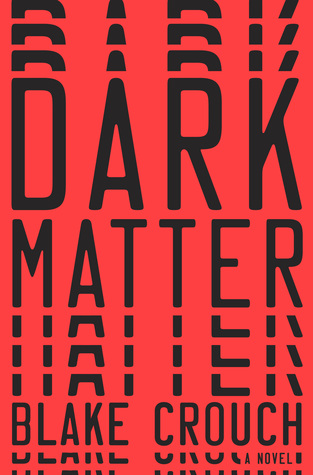
I can't actually tell you anything about this book except to call it a "literally mind-blowing physics-based romance that sci-fi fans and EVERYONE else in the world will love" without giving away a bunch of spoilers because pretty much everything after the first 20 pages is a mind-blowing thrill ride. I mean it--it could do permanent damage. Consider wearing a helmet because this book is a wild trip through space, time, and love.

1. The best use of Schrodinger's Cat in a book ever?

2. EVER


3.Daniela!
4. The string!

5. Jason(s)!
6. That feeling when your ebook expires with, like, 50 pages left and IT IS GETTING REALLY REAL

7. #TFW your reading twin texts to tell you her mind was so LITERALLY BLOWN by this book that she can't even use words anymore and just sends you a bunch of emoji only your hold hasn't come in yet so you still haven't finished it

8. That feeling when you're not at work the day she sneaks you her copy through interdepartmental mail and all you can think about all day is that book sitting in an envelope on your desk but you just moved and have so many boxes left to unpack and then you finally get to read it and can't put it down and then THAT SCENE IN WISCONSIN OMG (you'll see)
9. Best use of Reddit in a book ever?
10. THAT ENDING THOUGH

*Thanks TT

Thursday, April 21, 2016

It's International Dublin Literary Award Time!

Behold! The Richmond Public Library Nominees for the International Dublin Literary Award!

It's time once again to nominate a few good books for the International Dublin Literary Award. Since we've already sung the praises of our three nominees for The Award on this blog, I thought I would recommend some "readalikes" for our picks to you. The thing about books like these, the books that stand out as completely outstanding, award-worthy, one-of-a-kind and all that, is that they can be tough to compare to anything else. For A Little Life, I would look for other literary novels featuring complex characters, friendship and love, haunting secrets, abuse and trauma. A search for "five-star, gut-punchingly sad, haunt-you-forever, fiction" not surprisingly does not compute, and looking under subject headings like Families--Fiction, Bildungsromans, and Domestic Fiction just doesn't quite cover it. As I mentioned in an earlier review, Yanagihara's second, and thus far most massive melancholy masterpiece, is a bit of a tough sell when people ask me for a personal recommendation, even though it is easily one of the best books I've ever read. Maybe if I just hand a box of tissues over with the book people will get the idea.
So much tissue.
Anyway, NoveList to the rescue! This neat service ties in with our OPAC to deliver you the kind of nuanced "appeal terms" normal people (read: not librarians?) might use to describe the "feel" of books, from now on referred to as BookFeel™*. Search iBistro for a favorite book, click on the entry and scroll down to see what terms NoveList uses to characterize books, and what they might suggest for you to read next. Example:
All of these things appeal to me.

While you decide whether or not you can handle the agonizing beauty that is A Little Life by Hanya Yanagihara, check out the much slimmer I Refuse by Per Petterson (2014), Did You Ever Have a Family (2015) by Bill Clegg, and Aquarium (2015) by David Vann. These each share much of the same BookFeel and are thematically kin, with a heavy emphasis on "heart wrenching".

While you wait for The Fishermen by Chigozie Obioma, try The Lowland (2013) Jhumpa Lahiri and Dust (2014) by Yvonne Adhiambo Owuor. NoveList uses the following BookFeel to characterize The Fishermen:

  • Character-driven
  • Haunting, Atmospheric
  • Lyrical
I would not have immediately come up with The Lowland to pair with The Fishermen but after examining the relative BookFeel I would score this comparison a 3.9 out of 5 on my completely arbitrary personal scale. 


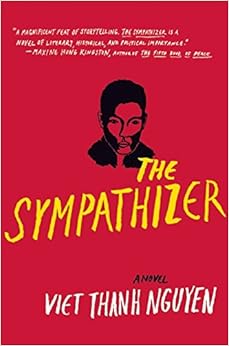
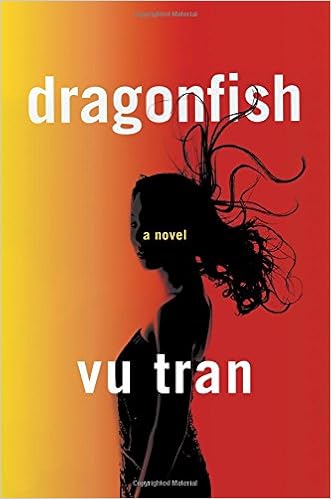
The Sympathizer is seriously not to miss, but also be sure to pick up Dragonfish (2015) by Vu Tran, and All our Names (2014) by Dinaw Mengestu.

BookFeel for The Sympathizer:

  • Character-driven
  • Leisurely paced
  • Sardonic, Moving, Bleak
  • Stylistically Complex, Compelling 
You had me at sardonic. 

A side note, these are my personal picks for a Sympathizer readalike because NoveList recommended Purity by Jonathan Franzen and Panic in a Suitcase by Yelena Akhtiorskaya, neither of which I wanted to second. (I just didn't really like them, OK?) While Dragonfish and All Our Names are quite different in style and narrator, both are highly original fiction dealing with identity and immigration, secrets, and cultural historical touchstones experienced from multiple perspectives.
Also: Whatever, Franzen.

*Bookfeel is a word (I think I might have) made up to describe the appeal of a book. See also: Mouthfeel, a word I hate because it is gross. Ew.
It's like you've known me forever, iBistro. 
Before you run off, check out the Dublin shortlist of nominees for the 2016 award. You'll see a few blog favorites on the list, and a few more you might enjoy.

Friday, February 05, 2016

YA Reads for 2016

A Big Dose of Lucky by Marthe Jocelyn 
Malou is a sixteen-year-old mixed race girl who has no family and has been living in an orphanage all her life. She has the desire to search for her family and find her roots. After her orphanage burns down, Malou receives some hints that she may have been born in Ontario’s cottage country and goes on a mission to find out where she comes from. This novel is set around the time of John F. Kennedy's assassination, continuous racial tension, social and sexual inequalities. A Big Dose of Lucky is part of a seven book series, but the series can be read in any order.

Juba! A Novel by Walter Dean Myers 
William Henry Labe, also known and Master Jubba, was a free slave and a dancer who danced in America and England in the 1840s. In his final novel, Walter Dean Myers captures the light of a person who helped influenced today’s tap, jazz, and step dancing.  


Not If I See You First by Eric Lindstrom 


Parker Grant does not allow her vision disability to define her while balancing her life as a normal teen. In her short life, Parker already dealt with a lot of tragedy. She lost her mother and sight at an early age and her father died when she started her junior year of high school. To add to all the problems weighing on Parker’s shoulders, her ex boyfriend, Scott Kilpatrick, resurfaced after breaking her heart when she was thirteen. Parker is a strong individual who has set a ground rule for no one to treat her any differently just because she's blind, and never take advantage. There will be no second chances. But when her ex tries to reach out to her, she tries hard to stick to her rules, which makes her second guess them.

Yo, Miss A Graphic Look at High School by Lisa Wilde 
This graphic memoir is told from the point of view of the author, who is also a teacher at John V. Lindsay Wildcat Academy. Wildcat Academy is a school in New York City to give teens who have been suspended, had issues with the law, and even teen parents, a second chance at an education.Wilde's graphic novel was inspired by portraits she created during her lunch break as well as poetry created by some of her students.  

Friday, January 29, 2016

The Book Hunter's Guide to Blogs about Books

It's winter. You need to have a pile of books on every surface to keep you busy while you hide under all of your blankets, riding out snow storms, bitter winds, and icy sidewalks. There are many blogs by readers, for readers, to help you decide how best to supply your stacks. Check out a few of my go-to blogs for the best recommendations for all tastes of books from the past, present, and future.

For the best in lists, enjoyable writing, and great, diverse book selections, Book Riot is one of my favorites. "Book Riot is dedicated to the idea that writing about books and reading should be just as diverse as books and readers are. So sometimes we are serious and sometimes silly. Some of our writers are pros. Many of them aren’t. We like a good list just as much as we like a good review. We think you can like both J.K. Rowling and J.M. Coetzee and that there are smart, funny, and informative things to say about both and that you shouldn’t have to choose." I think you'll love reading the Meyers-Briggs types of 202 literary characters.

The Millions is staffed by some outstanding new authors including Garth Risk Hallberg, author of City on Fire, and Emily St. John Mandel, author of Station Eleven so you can expect some high-quality writing from these guys. I always look forward to adding to my to-read list from their "most anticipated" feature on GoodReads.

The Indie View is devoted to reviewing the best in self-published books. Don't dismiss the self-published book! Publishers can be quite fusty and a lot of good writing is turned down for supposed lack of marketability. Consider The Martian by Andy Weir which was originally self-published, only to be picked up later by Crown Publishing after tremendous online success, and eventually turned into a box office smash starring Matt Damon.

Io9's book reviews are written by devoted superfans of science-fiction and fantasy. If you really love sci-fi or fantasy, make Io9 your first stop for what's coming out and what you may have missed.*

Omnivoracious, from Amazon, The Page Turner from the New Yorker, The Guardian, and NPR Book Reviews are all trusted standbys for quality book reviews. Check out this post from The Guardian in their Food in Books feature: mushroom, bacon and leek pie from The Fellowship of the Ring

The Mookse and the Gripes is one I sometimes forget to look at but I'm always glad when I remember it. "The Mookse and the Gripes is a website dedicated to literature and film, from any part of the world and from any era. It was created in July 2008. In October of 2012, The Mookse and the Gripes podcast, a podcast primarily dedicated to the books published by NYRB Classics, was born."

For reviews of graphic novels, check out Shelf Abuse, "a site devoted to comic books and graphic novels, specifically indie titles and small press releases. Occasionally, a movie or video game review also makes its way here."

Try the Bookrageous Podcast for funny and thoughtful discussions among true book lovers.

Don't forget about Novelist!
Use your library card to access this helpful service used by professional librarians to tailor recommendations based on books and authors you know and love.

*P.S. All the Birds in the Sky by Io9 editor-in-chief Charlie Jane Anders is ALL OVER the blogs lately so you might want to add it to your to-read pile.

Friday, October 23, 2015

Good news for fans of Sherlock Holmes

Although Arthur Conan Doyle published his last Sherlock Holmes story almost ninety years ago in 1927, the popularity of the character has never waned. A steady stream of books, comics, plays, movies, and TV shows continue to re-imagine this master of observation and deduction. As a long-time fan of the Holmes detective genre, I watch almost all the new movies and TV shows, and inspect the latest books. Most of them, however, fail to live up to my lofty expectations. The popular movies starring Robert Downey Jr., for example, turn Holmes into an action figure more like Batman. While perfectly entertaining, these movies have little to do with my image of the detective. More my style is the recent BBC series starring Benedict Cumberbatch as Sherlock Holmes, or the movie Mr. Holmes from this past summer that portrayed Holmes struggling with memory loss in his old age.

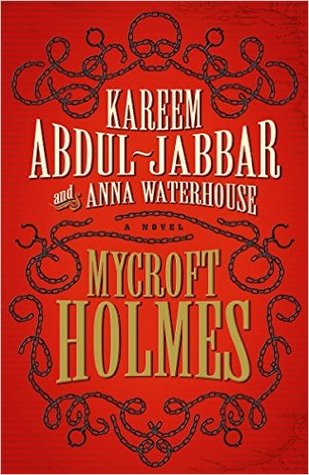
The latest novel to embrace this genre, Mycroft Holmes, by Kareem Abdul-Jabbar and Anna Waterhouse is a pleasant surprise. What first caught my attention is the book’s co-author, Kareem Abdul-Jabbar, a person best known as the all-time leading scorer in the NBA. Since his basketball retirement in 1989, Abdul-Jabbar has co-authored a number of books with African-American history themes, but this is his first venture into fiction. Mycroft Holmes, a minor and somewhat mysterious figure in the original stories, comes to life in this novel, demonstrating a similar intellectual rigor and similar egotism as typically displayed by his brother. Set in the early 1870s, this novel finds Sherlock at college and still refining his powers of deduction under the tutelage of his elder brother Mycroft, a civil servant in the British government.

What Mycroft Holmes does very well is weave in a history of African Diaspora, slavery and racial oppression without overwhelming the underlying mystery. The story is set in motion by a number of strange deaths in Trinidad attributed to the douen and lougarou, evil spirits that might remind the reader of the hound of Baskerville. Mycroft is drawn into this mystery by the concerns of his fiancé, Georgiana, whose family are white plantation owners on the Island, as well as his friend Cyrus Douglas, a businessman of African descent, born in Trinidad. There is richness to Douglas’ character, as a person who has to continually negotiate a difficult racial path in Victorian England.  On the other hand, the most disappointing aspect of the story is the lack of well-developed female characters. Even Georgiana, the central femme fatale, is such a flat half-character that I scarcely cared about her. It would have enriched the story a great deal if the reader could be more invested in her role. While the story is engagingly well-written, with elements that will remind the reader of Doyle’s work, it never reaches the depth or complexity of the original. The mystery that motivates Douglas and Holmes to take a difficult journey to Trinidad becomes secondary and its solution is almost inconsequential. There is instead an action sequence toward the end of the book that will remind the reader more of the Downey movies than the deductive reasoning with which my image of Sherlock Holmes uses to bring his cases to a close.

How about you--who is you favorite Holmes? What are your favorite adaptations in books and shows?

 --Reviewed by Kevin S.--

Friday, October 09, 2015

The best of fiction lately, and (hopefully) good to come

You Too Can Have a Body Like Mine
by Alexandra Kleeman

If you're like me you've also been hoping Miranda July and Amelia Gray would get together and collaborate on a remake of Single White Female (the very 90s thriller starring Bridget Fonda and Jennifer Jason Leigh). Except this version has Don DeLillo as script editor, turning it into the story of a woman, referred to only as A, having an existential crisis in a "Wally", an invasive species of chain megastore clearly designed by Ayn Rand. Wally shoppers are warned that "weakness thrives on help". A's roommate, "B", has gradually become more her than her, absorbing A's boyfriend (you guessed it) "C" in the process. After misplacing C altogether, A ventures to Wally to find a product--not unlike a crowbar--to make her feel more like herself and is directed to the veal. What follows is an experience with a cult, The Church of the Conjoined Eater, that is so surreal it's almost too real. Kleeman's nightmarish descriptions of commercials for cosmetics and Kandy Kakes, a truly nauseating sounding chemical confection, and awful reality television are marvelously, deliciously satisfying, and dare I say, Kafkaesque. Fans of White Noise and Threats, and critics of consumerism who also consume, will devour every weird bite of this and beg for more.

"He who sits next to me, may we eat as one." --mantra: The Church of the Conjoined Eater--

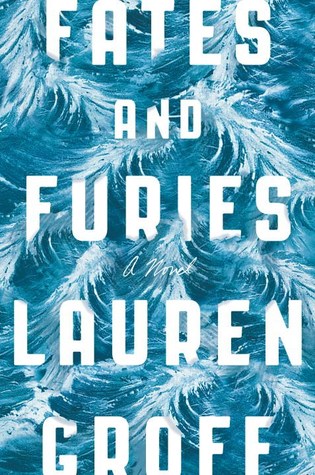
Fates and Furies
by Lauren Groff

So these three librarians walk into a bar...sorry, there's no punchline--that's just how book club starts. A few of us recently discussed Fates and Furies at Portrait House and unanimously declared Lauren Groff to be wise beyond her years; her prose seems to come from a much more mature pen.
Part one, Fates, concerns itself with the rich and charmed life of playwright Lotto Satterwhite. In part two, Furies, we learn of his wife Mathilde's story, revealing much more about Lotto. 
I admit to getting the audiobook of this one (which still somehow feels like cheating even though it's totally NOT) and while I think I missed some of Groff's inventive sentence structure in the text, I also feel I got more out of Lotto's plays included in the latter portion of the Fates. For those of us with the print version the plays felt cumbersome and unnecessary, but the audio performance of the included portions of plays flowed right along with the story.

Far more than a marriage novel, the premise is theatrical and the characters are larger than life in the same way. A not to miss performance!

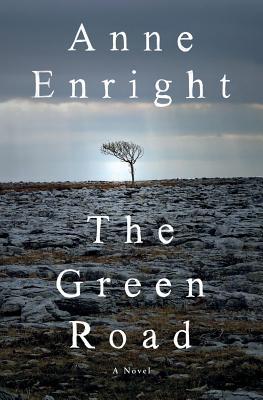
Passing along the recommendation of fellow book-clubbers, (of the non-violent sort in case you were just now picturing a group of people clubbing books) I am now halfway through The Green Road by Anne Enright and utterly riveted by this Irish family saga--what some might say is the mother of all family sagas (ha ha)--following 30 years in the lives of Rosaleen Madigan and her four far-flung children. I try not to give halfway done recommendations too often but Ellen and Beth promise me that I will love it, and so will you.

Address any complaints to them.


Right now I have high hopes for:

Gold Fame Citrus by Claire Vaye Watkins

Claire Watkins has channeled her experience of growing up in the Mojave Desert into a literary vision of a wrecked near-future California. I'm especially looking forward to her reportedly disquieting descriptions of the landscape of spooky dunes.

Check out her NPR interview here.
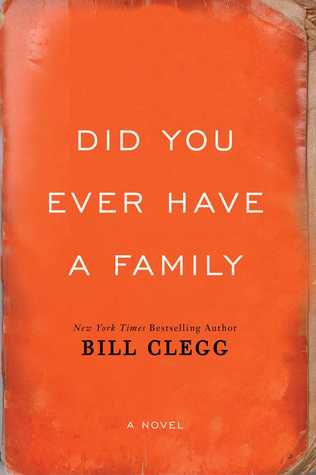
Did You Ever Have a Family by Bill Clegg

Longlisted for the 2015 Booker, this highly regarded debut tragic novel is currently taunting me from the coffee table, waiting for me to finish up with The Green Road.

Be warned: I'm told it's really tragic.

Friday, September 25, 2015

Noir with a twist, and war with a side of humor: not-to-miss new fiction from two Vietnamese American authors

The Sympathizer by Viet Thanh Nguyen

"...for who but a man with two minds could understand a man with no face?"

A top contender for my "Best of 2015" award, which if you are keeping track you know that list also includes The Tusk That Did The Damage and A Little Life, among othersThe Sympathizer is dark humor at its finest, and an expert portrayal of the duality in the life of a man "with two minds": that of Vietnamese, and American, that of a secret agent of the Viet Cong and officer in the South Vietnamese Army.

The novel is written as a jail cell confession by a double-agent returned to Vietnam after years in the United states, during which time he worked on a film about the Vietnam War by "The Auteur", a character that seems to be based on Oliver Stone. From Mr. Nguyen's interview on NPR: "I remember sitting and watching Platoon in a movie theater, and when the Vietnamese were shot, people would cheer. I was like, "Wait, that's weird, who am I supposed to identify with at this moment?" Nguyen adroitly weaves wry humor through his grim account of a war told from different sides.


Dragonfish by Vu Tran

Dragonfish is a gritty noir thriller complete with a chain-smoking, flawed, corruptible detective chasing the ghost of the woman who left him through the Vietnamese underworld in Las Vegas.

Suzy, haunted by memories of her time spent in a refugee camp in Malaysia after the fall of Saigon, disappears from her life and tumultuous marriage to Robert, a hard drinking, hard-boiled detective.

Friday, July 24, 2015

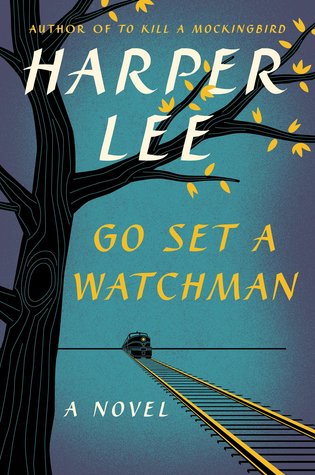
Spoiler Alert: Go Set a Watchman and The Meursault Investigation

You didn't think we were going to stay quiet on Go Set a Watchman, the hotly anticipated, much debated, sequel/alternate reality to Pulitzer Prize winning American classic To Kill a Mockingbird, did you?

No. Way.

Have you read it? Strong feelings on the shocking revelations in the final chapter? We want to hear your thoughts too! Share your opinions in the comments--call it an ebook club if you must. Let's do this!

Many readers and reviewers have expressed shock and heartbreak over what people feel is a drastic shift in the character of Atticus Finch. I would argue, as others before me have, that it isn't just a change in him, but also a reflection of changes in society. That's how fiction does it, really. Harper Lee didn't have to concern herself with telling the reader how Atticus Finch really felt about desegregation in To Kill a Mockingbird--it wasn't the most pressing issue for him in 1930-something, and it had little to do with the events at the center of Mockingbird. I'm not even going to get into all that controversy; it's been discussed adequately elsewhere and I have other issues to address with this novel.

My own personal feelings about Go Set a Watchman?

It's just not very...

*Deep breath*

good.

I mean, it's OK, I guess. I do think if it had been published right after To Kill a Mockingbird, or in addition to it (as a much longer work), people wouldn't still be talking about Mockingbird. It's been long enough now since Lee's first book that it won't likely run the risk of being overshadowed by the mediocrity of her second. Go Set a Watchman reads a bit like watching the reel of deleted scenes at the end of a DVD and wishing you hadn't, or, if you've ever been disappointed by the director's cut (Aliens? I'm looking at you, Ridley Scott) you know that sometimes, most times, an editor is actually a good thing to have at one's disposal. If only I had one to look behind me for blunders...

The only real tension or conflict, and the only actually interesting thing to happen in Watchman, happens in what has been the most confounding, upsetting, and jarring portion of the book for so many readers. If you have been hiding underground, deliberately avoiding reviews of this book like some sort of plot spoiling virus, you won't know to what I'm referring. This novel is missing something like the court case that was at the center of Mockingbird to propel the narrative. It lacks any kind of glue to adhere the scraps of homespun southern charm in Jean Louise's many mental digressions. Scout's return home from New York to a slightly different Maycomb isn't enough. In fact, it leans a little hard on the "can't go home again" trope.  It also makes the assumption that readers already know and love Mockingbird, and I'm sure most do, so that all the character, plot and setting development that Lee did so splendidly before is an unnecessary trifle, and you won't find any of that in Watchman. The basics: Scout comes home, has some flashbacks to her childhood, argues with her father, forgives him. 

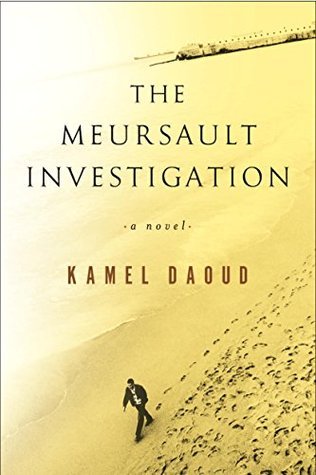
A far better pick, in my humble opinion, from the "long awaited sequels to beloved classics" list: The Meursault Investigation by Kamel Daoud which follows up with the events of The Stranger, Nobel prize-winner Albert Camus's novel about a young French man allegedly so confused by heat stroke that he shot and killed an unarmed man, an "unnamed Arab", on the beach in Algeria. Daoud's novel names the victim Musa, and tells the story of his murder and the terrible aftermath from the perspective of his brother, Harun. After years of living in the shadow of his brother's murder, Harun opens up to a journalist in a bar about the tragedy that shaped his life, his story of isolation, suffering and violence, revealing the troubled legacy of colonialism in Algeria.

The Meursault Investigation is a tremendous complement that may even surpass the original, and a poignant criticism of The Stranger. They should be read and discussed side by side from now on.
Friday, July 10, 2015

Looking to get the most out of your travels this summer? Try a taking a literary tour!

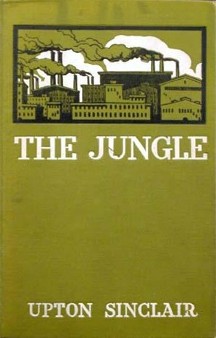
Often the setting of a novel is as important to the story as any of the characters. This is quite true in the case of the Chicago of The Jungle.Years ago, just for grins, I went on a self-guided tour of Upton Sinclair's Chicago--specifically through the meat packing district. The idea of immersing myself in the setting of a book that was so richly detailed in the text was a thrill. It wasn't a long tour as it isn't a big area but even as it has clearly been cleaned up (one would not want to spend much time in Sinclair's meat packing district at the turn of the last century) one can still see the streets and buildings, smell the smells, and hear the activity of Chicago's still functioning meat packing district...though maybe that experience isn't for everybody.

Let's journey a few thousand miles further to Istanbul, Turkey, the setting of, and major character in, Orhan Pamuk's romantic and deeply immersive literary and art experience:

The Museum of Innocence and The Innocence of Objects by Orhan Pamuk

The golden ticket!
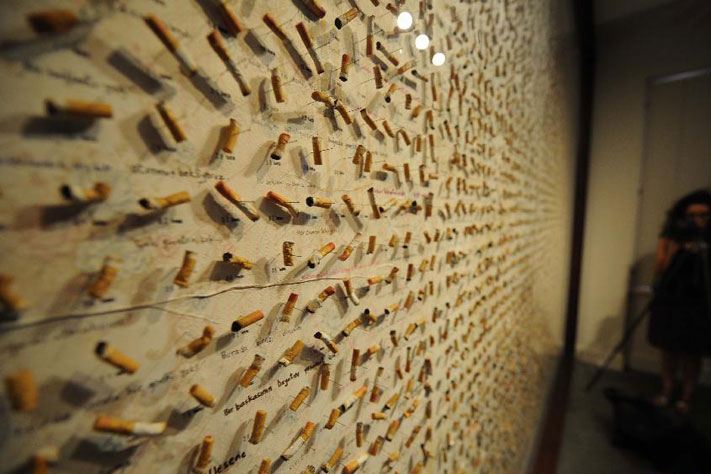
Kemal, the wealthy scion of a prominent Istanbul family and engaged to marry the similarly wealthy Sibel, unexpectedly reunites with his childhood friend Füsun while she is working in a shop. Though from different classes and different worlds, of course they embark on a devastating love affair. Over the course of his decades long obsession, Kemal collects thousands of small objects that remind him of moments he spent with Füsun and assembles them into a museum. Many of the objects are stolen from her, many are simply discarded waste that he pockets (over 4,000 carefully documented cigarette butts make up the first exhibit in the museum), and many items are donated by her family to his museum.
Sunset on the posh streets of Beyoğlu, where Kemal roamed

In the ultimate blurring of fact and fiction, author Orhan Pamuk built a really real museum, based on the novel, in the really real neighborhood where fictional Füsun's family lived. He built the museum faithfully to his own description in the book which was written as if by fictional Orhan Pamuk, supporting character, friend and confidant of fictional Kemal. Lost yet? Good!  Get lost in the book and cross over into the surreal and awesome experience of walking in a beloved fictional character's footsteps. Think Harry Potter world, only instead of wizards and magic we have a bittersweet love story for grown-ups. At the museum one can examine Füsun's dresses, butterfly earrings (even buy a pair in the gift shop!), her movie ticket stubs, dozens of small ceramic dogs (my favorite case), other pilfered trinkets, and the aforementioned lovingly described 4,213 cigarette butts in a giant wall case--complete with her shade of lipstick dotting the ends. The Innocence of Objects, a third work in this experience is the gorgeously photographed and beautifully written exhibit catalog. Once you fall in love with The Museum of Innocence, check out the exhibit catalog, The Innocence of Objects, and fall in love again. Then plan your trip to Istanbul and prepare to be amazed.
For the full experience I recommend reading both of these books and then going to the museum. (The only thing possibly missing is a film version of the book but I have no idea if one is on the way.) When you go, bring The Innocence of Objects with you, or pay the extra 10 Turkish Lira for the audio tour--otherwise you will have to rely on memory as there is very little text in the museum to remind you of what the assembled items in each case represent. Though they are an impressive collection of Turkish culture and do stand on their own as a work of art one can enjoy without even having read the novel. Photography is absolutely NOT allowed in the museum, so here are some pictures I took:
The line between fact and fiction delightfully blurred in Kemal's bedroom installation
Manuscripty!
The cigarettes! I borrowed this photo from the internet because the guard could see me trying to sneak a photo. First rule of literary traveling: Don't get kicked out!
For a little background on why he did this, click here for Orhan Pamuk's Manifesto for Museums.

From the city we journey to the countryside with Memed, My Hawk by Yaşar Kemal.

Published in 1951, Yaşar Kemal's debut novel set in a remote mountain village in Eastern Turkey follows the life of Slim Memed from abused and exploited child working for a cruel landlord to legendary avenging brigand. The novel describes in great detail the setting--the mountains, small villages, and the eerily beautiful but brutal thistle fields of rural Anatolia are essential to the development and actions of the characters. I bought this book in the airport in anticipation of an excruciatingly long layover and selected it for the contrast of hiking rural Anatolia after the very urban experience of reading Pamuk in Istanbul. Books have a way of taking you there, and taking you back. Before Istanbul we rented a car and drove through the countryside to an inn near Midas City (Midas Han, if you find yourself off the beaten path, is pretty much the best thing ever) to hike around the remains of the Phrygian kingdom, which lasted from about 1200 to 700 BC and was home to the Gordias and King Midas. The mountains, the villages, and the brutal fields of thistles, were there just as described in Memed, My Hawk, as well as some amazing hiking around really cool tombs and monuments.

The Ataturk airport bookstore's "Turkish Interest" section
A monument 
Phyrigian traffic jam
Tombs!
So just for fun in the comments, tell us your vacation destination (real or wishful thinking) and we will reply with a book recommendation to round out the experience. Bon Voyage!