Showing posts with label richmond. Show all posts

Thursday, March 23, 2017

We made it!

The 25th Annual Richmond French Film Festival, co-sponsored by VCU and UR, is upon us and promises to be the best yet!  Not only is the festival occurring over a full week at both the Byrd Theatre and the University of Richmond but there are also special events scattered throughout, such as a live concert by Henry Padovani, one of the founding members of The Police (following a documentary about him) and a special poetry recitation by one of France’s preeminent actors, Philippe Torreton, which closes the festival.  

Padovani pictured center

Jacques Perrin
Other special guests include composer Bruno Coulais and director-producer-actor Jacques Perrin.  They will be presenting symposium lectures as well as introducing and moderating q-and-a sessions for both films they have worked on together and separately. One of these, the Coulais-scored Coraline, was a popular American release in 2010.

Winged Migration, a joint hit for both, was widely shown in the United States (I saw it at the much-missed Westhampton Theatre) but on Friday afternoon it will be shown in its original French release, Le Peuple Migrateur.  As the Festival poster proudly proclaims, 700 films have been screened and 850 members of the French film industry have come to share their experiences with us since the first festival in 1993.  This year’s program includes 8 features, 6 documentaries (3 by Perrin) and 11 short films, plus the first North American showing of the Magic Lantern show from the Cinematheque Francaise.

There are several past Festival selections currently available in our DVD collection, including last year’s The Clearstream Affair.  My favorite drama of all those I have seen is Claude Miller’s (the Honorary Godfather of the Festival who passed away in 2012) Un Secret/A Secret (2008) and my favorite comedy is Le Prenom/What’s in a Name? (2013).  Other notable selections include the children’s film Belle and Sebastian, Gemma Bovery, The Hedgehog (adapted from the Muriel Barbery novel The Elegance of the Hedgehog), Pour une Femme (For a Woman), RenoirLe nom des gens (The Names of Love), Hors la loi (Outside the Law) and the extraordinary documentary Oceans, yet another outstanding cinematic work by Jacques Perrin!

(Many thanks to Robert Hickman of Westover Hills, our resident French film expert, for this annual update!)

Friday, December 09, 2016

Richmond's a Real Person


This fall the Main Library hosted the Richmond Zine Fest, an exciting frenzy of do-it-yourself printed matter. Richmond in fact has a long history of forward-thinking publishing, stretching as far back as the Southern Literary Messenger, edited by Edgar Allan Poe, and, in the 1920s, the ambitious “little magazine,” The Reviewer

Between the Messenger and The Reviewer the South went through a period that caused H.L. Mencken to refer to it as something of a cultural desert. In 1921 the book section of the Richmond Evening-Journal closed, and its editors decided at a party in the Fan to continue reviewing books and publishing fiction and to prove Mencken wrong. Emily Tapscott Clark, The Reviewer’s first editor (pictured below), remembers someone simply stating: “Let’s start a little magazine.”

That magazine, The Reviewer, sought to be both regional and experimental, to see past the mists of the Old South towards new literary forms. In its first issue Mary Johnson recalled a man who, after visiting Richmond for the first time, said, “‘I shan’t let it be the last time. Richmond’s a Real Person!” Johnson agreed, and extended the sentiment: “A real person always has literary value.” Publishing from and about this real entity meant exploring new approaches to literature, dispelling old myths and finding new ones. 


Credited with prompting the Southern Literary Renaissance, The Reviewer published work by Ellen Glasgow (who lived not far from the Main Library), Gertrude Stein, and English stylist Ronald Firbank, whose eight short novels remain as challenging as they are hilarious. Reviewer editor Hunter Stagg (seen above as painted by Richmond-native Berkeley Williams) went on to spend time with Firbank in Europe, furthering a bridge between The Reviewer and the international avant-garde.

After 35 issues and the departure of editors Clark and Stagg, The Reviewer moved to Chapel Hill in 1925 and from there to Dallas, where it merged with The Southwest Review and continues to publish. The Main Library holds all original issues of the Richmond-based Reviewer as well as Clark’s memoir of her time at The Reviewer, Innocence Abroad.

Pioneering publishing lives on in Richmond ninety years after The Reviewer changed headquarters. Considering the daring nature of their magazine, Clark and Stagg would have been perfectly at home setting up a table at October’s Zine Fest, perhaps talking up the Gertrude Stein piece in the latest issue or handing out button badges that say: “Richmond’s a Real Person.”

Friday, August 28, 2015

Drift in Church Hill

If William Byrd II was reminded of Richmond upon Thames when he faced the James River, thus lending Richmond, Virginia it’s name, what if he had turned around to face Church Hill and tried—through sheer whim and curiosity—to see England there as well? A couple weeks ago, in ninety degree heat and feeling somewhat restless, I attempted to do just that. I looked out at the James as Byrd had done, and then…turned around.


The inspiration for this—and for the little journey I took through Church Hill afterwards—came from the French writer Guy Debord. Debord helped develop a practice called the “dérive,” or drift. The idea is to make your way quickly through an urban area connecting places that aren't usually connected. Often the paths we make through cities are dictated by things other than us. We follow the tourist areas, the shops, the signs with arrows. Debord called for “total insubordination to habitual influences,” either by drifting along the atmospherics you pick up or by playing certain games. I wanted to play a game.


“A friend recently told me that he had wandered through the Harz region of Germany while blindly following the directions of a map of London,” wrote Debord, offering an example of a beginner’s dérive. With new and arbitrary directions Debord's friend could shake his mind up, could see and feel things people didn't normally see or feel. Taking the cue from Debord’s friend I turned around from that beautiful view of the James with my own set of directions through London, knowing where they would have taken me if I were in fact in London, but having no idea where they would take me in Richmond.

Google “London” and the people in Mountain View, California will take you to Charing Cross, a roundabout joining Strand, Whitehall, and Cockspur streets. Considering that Charing Cross is the “center” of London and I too was standing at a roundabout (where 29th Street meets Libby Terrace), I decided to start my London directions there at the statue of Charles I. This meant that standing at Libby Hill and looking northeast, I wasn’t looking at any brick 19th century homes at all, but at the center of London.


The next thing I needed was a place to go in London, preferably somewhere not too far from Charing Cross since I didn’t want to walk a ways in the heat. I also needed a route to take me there, preferably one with lots of twists and turns, assuring that my walk through Church Hill would not be one I had ever taken before. I decided in advance my destination would be Geo. F. Trumper, a men’s barber shop in Mayfair, having seen it once in a documentary and happening to need a haircut, if only imaginary. I dragged the little blue line up and down my Google Map and gave myself a curly route.

Route planned, I could set the map aside. What I most needed were the directions: take a left, walk 43 feet; take a right, walk 0.2 miles. I listed all these in my phone and pulled up an app that would track my distance and location. Admittedly, carrying along a smartphone does not suggest insubordination to habitual influences, but this is drifting for beginners, and the 21st century.

The directions took me up 28th Street, across an alley to 29th. I passed the house where Edgar Allan Poe said goodbye to Sarah Royster. I went down a staircase to Farm Fresh and the Bottom. I had walked along some of these streets before, but always with an objective that took my mind out of the walk at hand—go to the store, to the coffee shop, walk in the shade. But since all I had to do now was blindly follow directions, and get a haircut near Hyde Park, I could relax, walk slower. The place I was in was important, not the place I needed to be. I didn’t even know where that was.

In the end I found Trumper the barbershop in a parking lot off Dock Street. I made fast work of the walk home, just generally staying out of the sun. And once home, seated at my desk, another and equally important walk could take place, this time not with streets but with documents. Looking over the locations I had recorded on my phone, I could draw out my Richmond route and compare it to the London map. It became a way of challenging my concept of London. Maps tend to make places seem bigger than they actually are, and by looking over where I had been, I could ask the map to tell me the truth: that a walk from Charing Cross to Trumper’s is no more than a lazy jaunt down the Hill.


Also at home, I could compare the places I had been to the places in London that had inspired my even being there. I took a turn at 28th Street solely because of a turn at Piccadilly Circus, and because of that, for a moment, the two spaces were transposed. They became one space. A hydrant was a newsstand, a garage a double decker bus.


Another dérive could take place now, also with documents, but this one cultural. I had already passed by, playfully and almost blindly, Guy Debord, Charles I, and Edgar Allan Poe. But now there were other things suddenly linked that had to be explored: the history of London barber shops, the development of the Richmond canal. Naturally this drift took me to the library.

Friday, June 26, 2015

Richmond’s Hidden History is Just Beginning to Be Told

Guest blog by Benjamin Campbell, author of Richmond's Unhealed History. 

The received history of Virginia, as taught in our public and private schools, our museums, our public sites and monuments, and even in our universities, has had a strange, orthodox, doctrinal quality to it. Sometimes – often – it seems comprised of a few great men, a few great ideals, a few great monuments, a lot of street signs, and some commemorative stamps, repeated over and over. Everything else is seen as a footnote, if mentioned at all.

The theft of native lands and decimation of 90% of the population of pre-European Tsenacomoco is taught as an exciting colonial adventure. The enslavement, torture, sale, and resale of 90% of the first white Europeans brought to the colony from 1607 to 1650 is unmentioned. The exportation of all of London’s convicted felons to Virginia and Maryland during the 18th Century is unknown. The revolution which sent 50% of the population into slave labor is described as a successful birth of freedom. And the second largest slave market in America, from which 300,000 or more African Virginians were ripped from their families and shipped into slave labor camps, is buried underground, not even a footnote in approved textbooks.

It is not that the untold stories are completely unknown. They are just not known in Virginia, and never have been. Richmond’s slave market was well described in the London Illustrated News in the mid-19th century. It was described in an excellent chapter in Frederic Bancroft’s classic Slave Trading in the Old South, first published in 1931; in William Still’s The Underground Rail Road, published in 1872; in Eyre Crowe’s With Thackeray in America, published in 1892; and in Charles Emery Stevens’ Anthony Burns: A History, published in 1856. The stories of the earlier Virginia Colony are well-documented – everybody has the same documents – but they are told in a triumphant European way, devoid of balance or historical perspective.

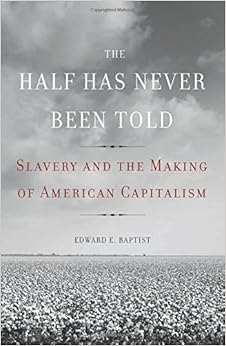
The work of Ed Ayers and Philip Schwarz, some good work at the Virginia Historical Society, and the recent exhibition on slavery at the Library of Virginia, along with a lot of unpublished work on the Burial Ground and Slave Trail in Richmond, are just beginning to unsettle the mythology of our city and state. The tarnishing of the fantasy has been supported by several national publications of note, including the movie version of Twelve Years a Slave and Edward Baptist’s recently published The Half has Never Been Told, a powerful description of the downriver slave trade.

We may, paradoxically, be obsessed with history in Virginia, not because it is wonderful, but to prevent difficult truths from being admitted. Otherwise, the complicated histories of injustice and conflict might rise to the surface, and we could, at last, move on to complete the task of healing our deep wounds.

-- by Rev. Benjamin P. Campbell, author of Richmond’s Unhealed History and Pastoral Director of Richmond Hill, an ecumenical Christian community and retreat center in Richmond, Virginia’s Church Hill.

Join Rev. Ben Campbell at Richmond Public Library’s Ginter Park Branch on Wednesday, July 8, from 6:00 - 7:30 PM as he reads and presents themes from his book, Richmond’s Unhealed History. Book signing will follow.

Friday, April 17, 2015

How to Stay in Twin Peaks: Go to the Library

Last week, Natalie mentioned the "dreamlike, earnest young people" and "seemingly ordinary settings" in the work of filmmaker David Lynch, just in time for Richmond's very own Twin Peaks festival, The Great Southern. The festival, organized by Movie Club Richmond, the Video Fan, and Makeout Creek Books, celebrates David Lynch's first foray into television, Twin Peaks, a serial drama that burst into pop culture in 1990 and has only grown in popularity since, its mysteries deepening in the minds of fans new and old.

Set in a small town in Washington state, Twin Peaks centers ostensibly on the murder of teenage Laura Palmer but spirals out to explore teen-dom in general, Americana, the perks and perils of the unconscious, and the nature of evil. Beginning last night in Carytown and ending late Sunday, The Great Southern will move across seemingly ordinary Richmond with performances, visits from actors and authors, a midnight screening, a costume party, and more. If you find yourself still hankering for Twin Peaks after the festival, or just want to whet your appetite for the first time, simply walk into the library and have the reference librarian point you in the direction of these topics:
 
Peyton Place
First a novel, and then a film, and then even a few television series, Peyton Place aims, like Twin Peaks, to reveal the lives of those who live in small town U.S.A., up to and including the things that no one likes to talk about. Lynch screened the 1957 film Peyton Place for his co-creator Mark Frost in the early development of Twin Peaks. It is a natural touchstone for any piece of pop culture that deals with small town life, and informs the sense of Twin Peaks as soap opera. It also starred Russ Tamblyn, later featured in Twin Peaks.
 
 
Film Noir
Lynch and Frost did not look only at depictions of suburban America before making Twin Peaks. The ultra-urban aesthetic of film noir heavily influenced the show. In many ways Twin Peaks is a soap opera film noir, or a film noir soap opera, or both. Coined by French critics, "film noir" refers traditionally to Hollywood crime films made just before and after the second World War. The films, like Double Indemnity and The Maltese Falcon, portray a fatalistic, morally ambiguous reality. And as in Twin Peaks, little elements in the film--objects, types of characters--are repeated until they take on a meaning and a grammar all their own.
Surrealism and Dreams
Juxtaposing the tropes of urban film noir with suburban America would be a classically surrealist move, and Lynch is often referred to as a surrealist. In surrealist works of art, the rational mind is downplayed in favor or unexpected connections and bizarre twists. There is a logic to surrealist art, but it's a dream logic. In Twin Peaks, Special Agent Dale Cooper looks especially to dreams to help him solve his cases. Look for Andre Breton's Surrealist Manifesto for background and check out a few dream dictionaries to see if your unconscious has been planting clues.

Thursday, November 13, 2014

Going the distance: tips for a reading marathon (or half), Polar Vortex edition

So far...so cold...
I will be running all 13.1 miles of a half marathon this weekend and I am debating the wisdom of running to an audio book. I want to find out if a good book might be an effective distraction from the mile by mile mental anguish of the countdown: "I still have 12 more miles of this...I still have 11 more miles of this...I can't believe I still have 10 more miles of this...I STILL HAVE 3 MILES TO THE HALFWAY POINT..." and so on, while still keeping my eyes on the road. I am what you might call a reluctant  runner.* Besides the obvious misery of dragging oneself out of bed early in the morning and in all weather, in funny looking neon clothing, running is also time spent not reading. I don't drive 30 minutes without first downloading an audio book to my phone for the journey, yet I have spent hours and hours running this year and haven't enjoyed a single sentence while I sweated. I so envy those joggers I see effortlessly flying along with ear buds nestled in their ears. I can never seem to keep them in; they always fall out at the most inopportune moments such as while crossing streets in traffic and pivotal scenes. The kind of headphones that hook over the top of your ears? Forget it. They pinch horribly and any additional discomfort on a long run is unacceptable. Speaking of discomfort, this weekend's forecast for the marathon promises a POLAR VORTEX swirling over Richmond, which is terrible for any number of reasons, but a 28 degree starting temp (the horror!)  means I must wear some kind of protective ear covering, which, besides keeping my ears from falling off, may have the added benefit of securing my ear buds in place. Ear muffs just might be the answer to the dreaded popping and flopping ear buds.**

So, what kind of book would motivate one to cross the finish line in a respectable amount of time?***

(*And slow.)
(**I am also decidedly accident-prone so this might be the worst idea I've ever had. Can any runner/readers advise me on whether or not listening to a book while running is at all sane?)
(***I am very flexible on the definition of "respectable".)

Perhaps a struggle or terrible ordeal of some kind would give me the inspiration and perspective I need to keep going?

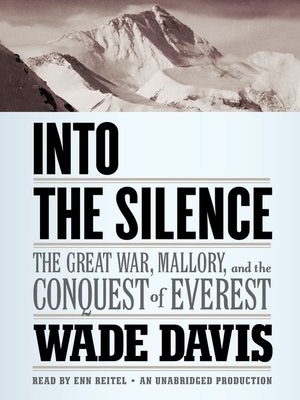
As of this morning I am aware that something known as "insensible water loss" exists. This kind of dehydration is common on cold, dry days when the usual warning signs of dehydration are less apparent. I guess the sweat just kind of evaporates before you really notice it. Anyway, people mounting Everest have suffered far worse in terms of cold weather and calamity. On top of my to-read/to-run-to reading list is Into the Silence: the Great War, Mallory and the conquest of Everest by Wade Davis. From the preface: "Norton pushed on, shaking with cold, shivering so drastically he thought he had succumbed to malaria. Earlier that morning, climbing on black rock, he had foolishly removed his goggles. By the time he reached the couloir, he was seeing double, and it was all he could do to remain standing. Forced to turn back at 28,126 feet, less than 900 feet below the summit, he was saved by Somervell, who led him across the ice-covered slabs. On the retreat to the North Col, Somervell himself suddenly collapsed, unable to breathe. He pounded his own chest, dislodged the obstruction, and coughed up the entire lining of his throat."

That ought to put things in perspective!

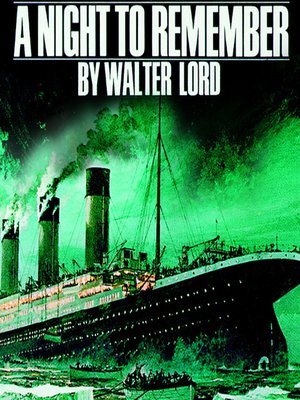
You know who else was really cold? People on the Titanic. They would probably all tell me to "toughen up", "it's only a measly 13.1 miles", "it's running, not swimming", and "it's 28 whole degrees. Practically tropical!" The good news is that A Night to Remember by Walter Lord is available on audio. From the description: "From the initial distress flares to the struggles of those left adrift for hours in freezing waters, this audio presentation will bring that moonlit night in 1912 to life for a new generation of readers." The prospect of being cold and wet makes me very happy that Saturday's polar vortex does not include rain.
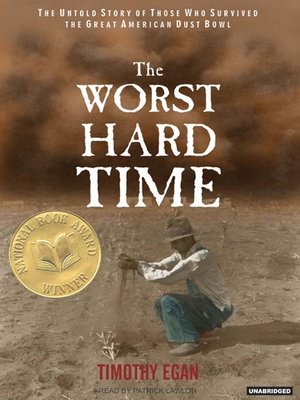
There is also nothing in Saturday's forecast about dust storms, but they are calling for it to be a bit windy. Perhaps National Book Award winning The Worst Hard Time by Timothy Egan will keep me moving. "The dust storms that terrorized America's High Plains in the darkest years of the Depression were like nothing ever seen before or since, and the stories of the people that held on have never been fully told. Pulitzer Prize-winning New York Times journalist and author Timothy Egan follows a half-dozen families and their communities through the rise and fall of the region, going from sod huts to new framed houses to huddling in basements with the windows sealed by damp sheets in a futile effort to keep the dust out."

I am also not going to prison...


but Piper Kerman's acclaimed account of her year in a women's prison (now a popular Netflix series) might motivate me to run just a little bit faster.
...or Mars...

but I could listen to Mary Roach's (author of Stiff) entertaining exploration of the hardships I would face attempting to just exist on such a journey, much less to run there.

Even if a long run isn't in your future, many of us are undertaking long drives around this time of year and as somebody who has driven from Richmond to Cincinnati and back again several times, I can tell you that a couple of audio books make the trip go by much faster. You can put down a 300 page book on an 8 hour drive and feel like nary a mile has passed (wellll...).

Recently we featured reviews of some exciting audio books on this blog (check them out here). When reviewing an audio book we not only review the original text, but also the quality of the performance of the text. Recording an audio book is a kind of acting and some are much better at it than others. (I personally hated the recording of Anthony Marra's A Constellation of Vital Phenomena and it is a testament to the quality of the writing that I stuck it out to the end. The reader's phony Russian accents set my teeth on edge just thinking about it now. The same goes for Emma Donoghue's Room. It was read by an adult putting on a squeaky child's voice. I lasted all of 3 minutes on that one. Long Man  was read in an over the top, Depression-era Tennessee Valley accent. I had to speed it up to 1.5 to get through it, yelling at my iPhone for the reader to hurry it up already but I am often accused of talking too fast so maybe it's just me. (It's probably just me.) Recently I've been LOVING Jess Walter's books on audio: We Live in Water and The Financial Lives of the Poets. He is one of many authors who read their own work and do so splendidly. Another to consider is George Sauders' Tenth of December. Saunders does an outstanding job of reading as well as writing. While not read by the authors these are also performed very well, funny in the right places, with appropriate accents and timing: A Visit From the Goon Squad, Last Man in Tower, To Kill a Mockingbird, read superbly by Sissy Spacek, and Snapper. Snapper was fantastic, a little dark, very funny, and perfect for a longish drive--especially one through Indiana.

Pro-tip: Download an extra audio book or two in the event of very long drives. Traffic delays and terrible accents are a fact of life. Prepare for the worst!

And hey, if you're not busy being warm inside, curled up with a good book and some kind of bourbon-infused hot beverage this Saturday, consider coming outside in the freezing cold to cheer on this running librarian. Just be sure to cheer loudly so I can hear you over my book. Also, be safe and watch out for major traffic snarls. Visit these sites for updates, routes, and stuff:

http://rvanews.com/news/2014-richmond-marathon-road-closures/118962
http://www.richmondmarathon.com/
http://www.richmondmarathon.com/upload/Race-Details/marathon-half-8k-all-routes.pdf

Saturday, October 18, 2014

BLOGtober Fest: Edgar Allan Poe Edition

The "Old Stone House", home of the Poe Museum, is the oldest building in Richmond. While Poe is not known to have spent time in this building, he surely would have been aware of its existence.
Southern Literary Messenger (source: Wikipedia)
Who attended the University of Virginia but was kicked out for his gambling debts, resigned as a sergeant-major in the U.S. Army to write prose, then accepted a commission to the military academy at West Point only to get himself court-martialed and expelled? Why, Edgar Allan Poe of course! He has been described as “the Michelangelo of the macabre; the Haydn of horror; the Einstein of the ethereal; the Rembrandt of the repulsive; [and] the Tchaikovsky of Terror!”


Illustration from the Masque of the Red Death, 1919 (source: Wikipedia)
Poe spent much of his troubled youth in Richmond. Orphaned, Poe lived with his irascible stepfather John Allan—who it seemed Poe never got along with unless John forked over some money to pay for Poe’s perpetual debts. Also while living in river city, Poe became so distraught over the death of his friend’s mother that he took on an upstream “six-mile swim [in the] James River.” Some scholars believe that Poe was actually attempting to commit suicide by swimming against the James’ rapid current.


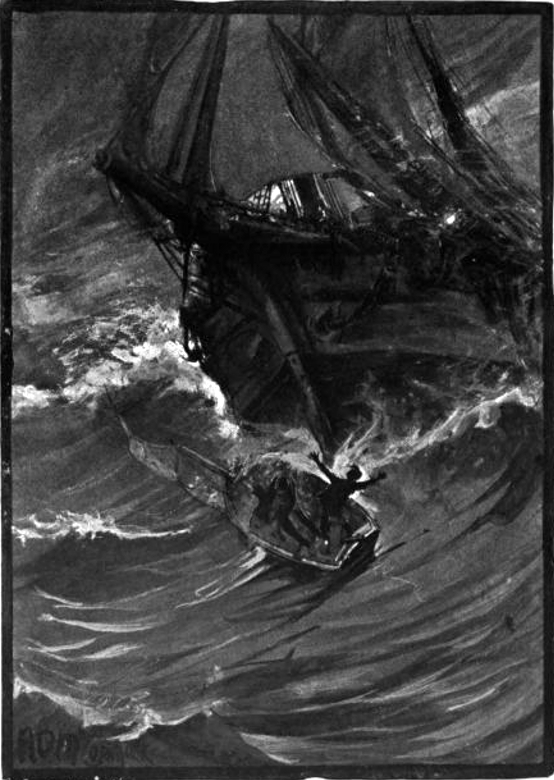
The Narrative of Arthur Gordon Pym of Nantucket (source: Wikipedia)
The master of horror fiction returned to Richmond many times as he traveled up and down the Eastern seaboard. It was in Richmond where Poe gained his first real literary job, as an editor at the Southern Literary Messenger. His job included writing, choosing stories, critiquing, and editing the prose of mid-19th century writers. Richmond was also the place where Poe met his first true love, Elmira Royster Shelton, though her father made Poe discontinue their engagement because he despised Poe’s devilish ways. Right before Poe’s death in 1849, Elmira and Poe rekindled their love—though it was alleged that her children also disapproved of the eccentric writer, and preferred if their mother kept her distance from him.

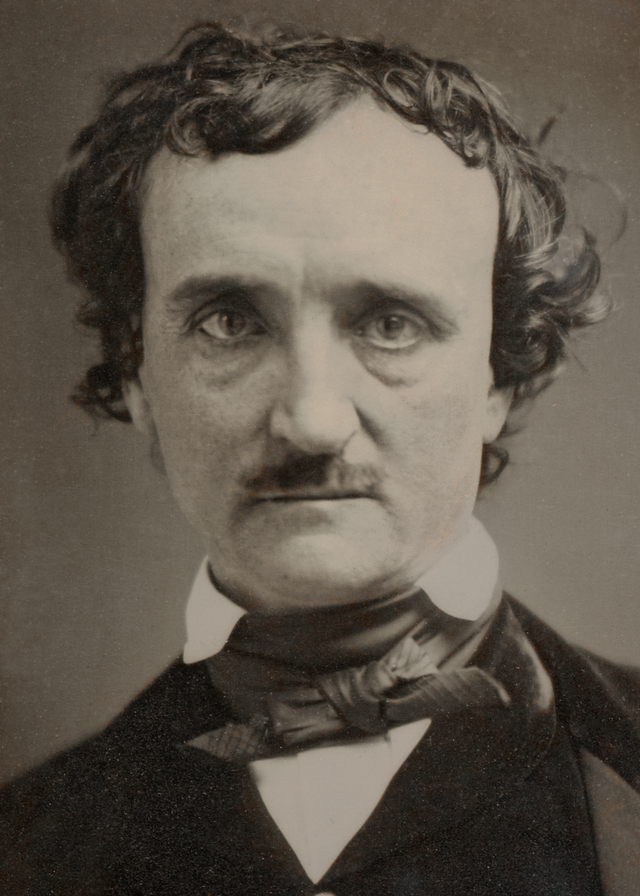
1849 "Annie" daguerreotype of Poe (source: Wikipedia)
In honor of Edgar Allan Poe, the Richmond Public Library will be hosting Poe to Go on Oct. 22 at 6 pm at the Belmont Branch. The event will be put on by the Poe Museum and is free to the public—though registration is recommended. There will be a mock trial that the public will have weigh in on in accordance to the beating heart in “The Tell-Tale Heart.” We will also play a short film that will showcase one of Poe’s more ghoulish tales. This event has been approved for teens & adults—so come out for night of horror & terror at the Belmont library, we will also be raffling off a hardback collection of Poe’s works at the event (the raffle is free!) so you won’t want to miss this ghastly event!


Thanks to guest blogger Gavin, Belmont Library