Showing posts with label history. Show all posts

Friday, January 15, 2016

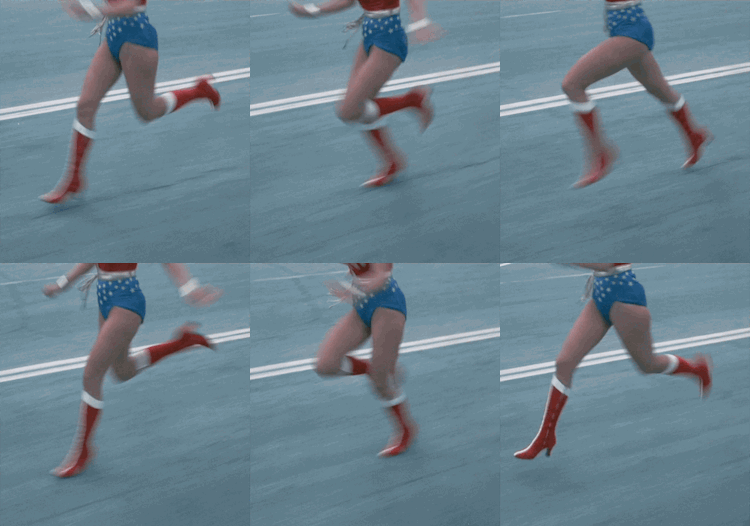
"Suffering Sappho!" Resolve to read The [awesome] Secret History of Wonder Woman this year

Comic book nerds? Book nerds? History nerds? Pop culture nerds? Nerd nerds? Not a nerd? Or are you one of those persnickety, tough-to-please folks who sniff at my recommendations? Have I got a book for all of you.

It is the 2015-2016 selection for Virginia Commonwealth University's  Common Book Program: The Secret History of Wonder Woman by Jill Lepore. The idea of the Common Book Program at VCU is to "support and stimulate the academic and intellectual culture of VCU through a common reading experience". This is why people seek out book clubs--for that wonderful feeling that comes from sharing a reading experience with others, and the opportunity to discuss ideas and what we learned, what may have challenged us to think in new ways. When a book thrills you, don't you immediately want other people to read it too? Wouldn't it be great if we had a huge, city-wide book discussion? A Super Book Club, perhaps? This book has something in it for everyone. Let's join in on the conversation happening at VCU about this marvelously compelling, thought-provoking book.

This story is fun and outrageous, almost unbelievable, and bawdy at times. Jill Lepore stays true to her subject by styling the book as a superhero origin story. The heroes in this case are many and the personalities are huge. Among the heroes are Margaret Sanger and her sister, Sanger's niece Olive Byrne, Elizabeth Holloway Marston, Wonder Woman of course, and at the center of our story is the fantastic and flawed hero William Moulton Marston, a fascinating and complicated man and a study in contradictions. He was a champion of women's rights (before it was cool), inventor of the lie detector test, charlatan, and polygamist. Lepore deftly uses Wonder Woman and Marston as the narrative connection between the Suffragists in the beginning of the 20th century and the women's movement decades later, making for an all around thrilling history of popular culture and American heroes.

There is something for everyone in this swift, engaging read. To be honest, I hadn't thought much one way or the other about Wonder Woman before reading this, certainly not much about her creator. I found the women behind the man behind The Woman to be especially intriguing, and although I've never really read superhero comics, I could not get enough of Wonder Woman's story. I found so much in the book to talk about that I want you all to read it too.

Run to your local library (or independent bookstore if you simply must own it) and check this one out. Join in on the conversation!


Another of Marston's contributions.

Friday, June 26, 2015

Richmond’s Hidden History is Just Beginning to Be Told

Guest blog by Benjamin Campbell, author of Richmond's Unhealed History. 

The received history of Virginia, as taught in our public and private schools, our museums, our public sites and monuments, and even in our universities, has had a strange, orthodox, doctrinal quality to it. Sometimes – often – it seems comprised of a few great men, a few great ideals, a few great monuments, a lot of street signs, and some commemorative stamps, repeated over and over. Everything else is seen as a footnote, if mentioned at all.

The theft of native lands and decimation of 90% of the population of pre-European Tsenacomoco is taught as an exciting colonial adventure. The enslavement, torture, sale, and resale of 90% of the first white Europeans brought to the colony from 1607 to 1650 is unmentioned. The exportation of all of London’s convicted felons to Virginia and Maryland during the 18th Century is unknown. The revolution which sent 50% of the population into slave labor is described as a successful birth of freedom. And the second largest slave market in America, from which 300,000 or more African Virginians were ripped from their families and shipped into slave labor camps, is buried underground, not even a footnote in approved textbooks.

It is not that the untold stories are completely unknown. They are just not known in Virginia, and never have been. Richmond’s slave market was well described in the London Illustrated News in the mid-19th century. It was described in an excellent chapter in Frederic Bancroft’s classic Slave Trading in the Old South, first published in 1931; in William Still’s The Underground Rail Road, published in 1872; in Eyre Crowe’s With Thackeray in America, published in 1892; and in Charles Emery Stevens’ Anthony Burns: A History, published in 1856. The stories of the earlier Virginia Colony are well-documented – everybody has the same documents – but they are told in a triumphant European way, devoid of balance or historical perspective.

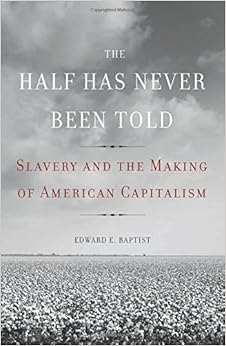
The work of Ed Ayers and Philip Schwarz, some good work at the Virginia Historical Society, and the recent exhibition on slavery at the Library of Virginia, along with a lot of unpublished work on the Burial Ground and Slave Trail in Richmond, are just beginning to unsettle the mythology of our city and state. The tarnishing of the fantasy has been supported by several national publications of note, including the movie version of Twelve Years a Slave and Edward Baptist’s recently published The Half has Never Been Told, a powerful description of the downriver slave trade.

We may, paradoxically, be obsessed with history in Virginia, not because it is wonderful, but to prevent difficult truths from being admitted. Otherwise, the complicated histories of injustice and conflict might rise to the surface, and we could, at last, move on to complete the task of healing our deep wounds.

-- by Rev. Benjamin P. Campbell, author of Richmond’s Unhealed History and Pastoral Director of Richmond Hill, an ecumenical Christian community and retreat center in Richmond, Virginia’s Church Hill.

Join Rev. Ben Campbell at Richmond Public Library’s Ginter Park Branch on Wednesday, July 8, from 6:00 - 7:30 PM as he reads and presents themes from his book, Richmond’s Unhealed History. Book signing will follow.

Friday, June 05, 2015

Richmond Upon James: An Unrivalled Landscape


You may know that our fair city, RVA, is believed to be named by William Byrd II after a view of the James River from Libby Hill reminded him a view of the Thames River from a village west of London called Richmond. The curve of the James as it begins its slope down the peninsula does indeed look like the curve of the Thames, as a quick tour of Google maps will confirm. But a tour of the library, its art books and novels, might yield more interesting glimpses of our city’s namesake than you can find in Google Maps, or even by flying to Richmond upon Thames itself. Here are a few works of art depicting the view that so impressed William Byrd. And if Byrd saw England when standing over the James, perhaps you can see Virginia in these portraits of the Thames.


Sir Joshua Reynolds painted The Thames from Richmond Hill in 1788. Reynolds (1723-1792) did not paint many landscapes, but he had excellent access to the view as he lived on Richmond Hill. He was the first president of the Royal Academy in London and delivered several lectures on art still celebrated today.


J.M.W. Turner, exhibited his England: Richmond Hill, on the Prince Regent’s Birthday in 1819. Turner (1775-1851) was a great admirer of Reynolds, requesting even to be buried beside him. He too lived close to the view and completed many drawings of it. Turner was recently the focus of a feature film, Mr. Turner, in which he stumbles his way through the gorgeous landscapes seen in his paintings.

In 1879, Charles Dickens, Jr., eldest son of the Charles Dickens you’ve heard of, wrote in his Dictionary of the Thames: “Nothing in the neighborhood of London is better known or more delightful than the view from Richmond Hill and Terrace, and when Sir Walter Scott described it as an unrivalled landscape, he was hardly saying too much.” Dickens was referring to a passage in Scott’s novel The Heart of Midlothian, which was published a year before Turner exhibited his painting. In the novel, a young woman named Jeanie Deans walks from Scotland to London to appeal to the Queen on behalf of her wrongly-accused sister. Here, Jeanie steps out of the Duke of Argyll’s coach and admires the view that Turner, Reynolds, and William Byrd II had admired.

“The carriage rolled rapidly onwards through fertile meadows, ornamented with splendid old oaks, and catching occasionally a glance of the majestic mirror of a broad and placid river. After passing through a pleasant village, the equipage stopped on a commanding eminence, where the beauty of English landscape was displayed in its utmost luxuriance. Here the Duke alighted, and desired Jeanie to follow him. They paused for a moment on the brow of a hill, to gaze on the unrivalled landscape which it presented. A huge sea of verdure, with crossing and intersecting promontories of massive and tufted groves, was tenanted by numberless flocks and herds, which seemed to wander unrestrained and unbounded through the rich pastures. The Thames, here turreted with villas, and there garlanded with forests, moved on slowly and placidly, like the mighty monarch of the scene, to whom all its other beauties were but accessories, and bore on its bosom an hundred barks and skiffs, whose white sails and gaily fluttering pennons gave life to the whole.”


Saturday, October 18, 2014

BLOGtober Fest: Edgar Allan Poe Edition

The "Old Stone House", home of the Poe Museum, is the oldest building in Richmond. While Poe is not known to have spent time in this building, he surely would have been aware of its existence.
Southern Literary Messenger (source: Wikipedia)
Who attended the University of Virginia but was kicked out for his gambling debts, resigned as a sergeant-major in the U.S. Army to write prose, then accepted a commission to the military academy at West Point only to get himself court-martialed and expelled? Why, Edgar Allan Poe of course! He has been described as “the Michelangelo of the macabre; the Haydn of horror; the Einstein of the ethereal; the Rembrandt of the repulsive; [and] the Tchaikovsky of Terror!”


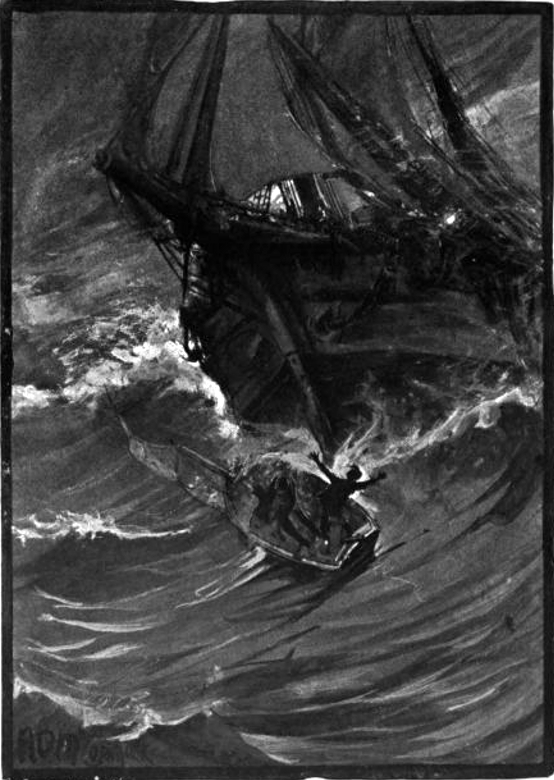
Illustration from the Masque of the Red Death, 1919 (source: Wikipedia)
Poe spent much of his troubled youth in Richmond. Orphaned, Poe lived with his irascible stepfather John Allan—who it seemed Poe never got along with unless John forked over some money to pay for Poe’s perpetual debts. Also while living in river city, Poe became so distraught over the death of his friend’s mother that he took on an upstream “six-mile swim [in the] James River.” Some scholars believe that Poe was actually attempting to commit suicide by swimming against the James’ rapid current.


The Narrative of Arthur Gordon Pym of Nantucket (source: Wikipedia)
The master of horror fiction returned to Richmond many times as he traveled up and down the Eastern seaboard. It was in Richmond where Poe gained his first real literary job, as an editor at the Southern Literary Messenger. His job included writing, choosing stories, critiquing, and editing the prose of mid-19th century writers. Richmond was also the place where Poe met his first true love, Elmira Royster Shelton, though her father made Poe discontinue their engagement because he despised Poe’s devilish ways. Right before Poe’s death in 1849, Elmira and Poe rekindled their love—though it was alleged that her children also disapproved of the eccentric writer, and preferred if their mother kept her distance from him.

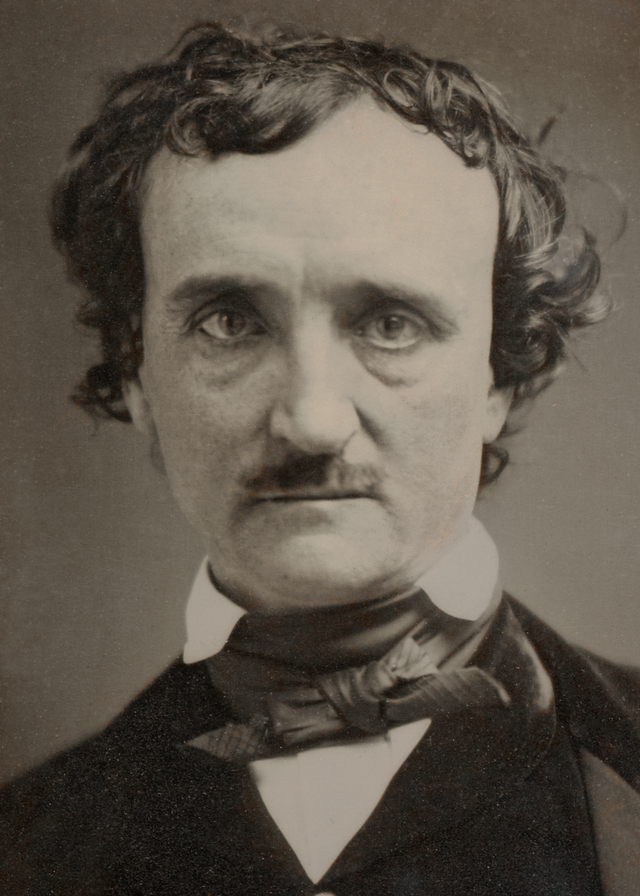
1849 "Annie" daguerreotype of Poe (source: Wikipedia)
In honor of Edgar Allan Poe, the Richmond Public Library will be hosting Poe to Go on Oct. 22 at 6 pm at the Belmont Branch. The event will be put on by the Poe Museum and is free to the public—though registration is recommended. There will be a mock trial that the public will have weigh in on in accordance to the beating heart in “The Tell-Tale Heart.” We will also play a short film that will showcase one of Poe’s more ghoulish tales. This event has been approved for teens & adults—so come out for night of horror & terror at the Belmont library, we will also be raffling off a hardback collection of Poe’s works at the event (the raffle is free!) so you won’t want to miss this ghastly event!


Thanks to guest blogger Gavin, Belmont Library

Wednesday, February 05, 2014


Collective History as African Americans:  

A Three-Part Class with Paula Royster this February @ Main


Collective Memory is a term used to describe memories shared among members of a cultural group. 

Commemorative events, anniversaries, holidays, and memorial services are ways in which people gather to maintain collective memory.  This month at Richmond Public Library's Main Branch, 
Paula Royster will be leading a three-part exploration of our Collective Memory as African Americans.

Paula Royster is a renowned genealogist, cultural anthropologist, and academic lecturer.  She will lead a discussion of collective memories in the African American consciousness, a session on tracing the slave trade, and an interactive discussion of our Collective History culminating in the creation of a time capsule.  Participants are encouraged to share their memories of Richmond.


Here is a more detailed look at each of the sessions:


February 8, 3-5pm: Collective Memory
What is collective memory, and how do we remember events that shape our collective memory?  How does collective memory manifest in our political structure and government, in memorial sites such as the African Burial Ground National Monument in new york, in our memorializing of Civil Rights leaders, and in our experience of events affecting the African American culture during our lifetimes, such as the Trayvon Martin case?

February 15, 3-5pm:  Tracing the Slave Trade

Ms. Royster will discuss the Slave Trade from a cultural, historical and genealogical standpoint.   This discussion will include the oft-forgotten, oldest known slave trade: the Arab-Oriental Trade, which spanned 14 centuries and operated across the Mediterranean and Adriatic seas into Europe.  The class will examine the ethnic identities of various peoples from across the globe.

 February 22, 3-5 pm:  Collective History 

This class will cover events of historical significance to the African American culture, including the civil war, Juneteenth, and Sesquicentennial, as well as historical figures such as W.E.B. DuBois and Marcus Garvey.  Join us to create a time capsule that captures the essence of our community, reflects the social, economic and political aspects of our time, and preserves how we want to be remembered. 


________________________________________________________________

Paula Royster is the founder, President and CEO of the Center for African American Genealogical Research, Inc/ (CAAGRI).  Ms. Royster is a guest lecturer at VCU, an Adjunct Professor at the University of Mary Washington, and a Fulbright Specialist.

Ms. Royster specializes in genealogy, Cultural Anthropology and the African Diaspora.  She chairs the Rappahannock Regional Juneteenth Committee and serves as an advisor to non-profit organizations related to her field. As a veteran genealogist, she has conducted seminars and workshops locally, regionally, nationally and internationally.

Friday, September 20, 2013

Banned Books Week | Celebrating the Freedom to Read

American Censorship
You may have heard in history class about Nazis burning books in Germany in the 1930s and 1940s.  Teachers and textbooks like to include that information to illustrate the repressive nature of the Nazi regime.  But did you know America has a long history of institutionalized censorship?

Many of the books that are now considered classics were challenged by censors for years after their publication, and many books are challenged today.  The Scarlet Letter, now required reading in many American middle and high schools, was censored heavily in its day and through the 20th century for being "pornographic and obscene."

Ernest Hemingway, now considered to be part of the vanguard of 20th century American literature, faced heavy censorship of his works during his lifetime.  Many of Hemingway's novels were banned by booksellers and schools.  The United States Post Office considered For Whom the Bell Tolls unsuitable to send through the mail because it contained “propaganda unfavorable to the state.”

Why is censorship dangerous?
Censorship in the United States highlights a fundamental contradiction of American society.  Though the country was founded on classical liberal ideals like freedom of expression and the marketplace of ideas, a deeply conservative vein also courses through America and demands that defined values be respected, promoted and protected.  Often, challenges to printed materials are motivated by good intentions: to protect people, and especially children, from potentially harmful material.  However, this need to protect our values becomes censorship if it becomes a call to ban books, or to otherwise silence voices.

The problem is this: the notion of established, accepted values that must be protected is typically a way to protect the viewpoints of the majority and the opinions of persons with power.  Censoring or silencing minority voices, controversial opinions, or unpopular views because they do not fit in with normative values not only deprives persons of free expression, but nullifies the freedom of the marketplace of ideas, excludes the values systems of minority groups and deprives minority groups of opportunities for empowerment through information.  Censorship can also have what is known as a "chilling effect," whereby persons begin to voluntarily censor their expression and information seeking because of a climate of restriction and fear.  Censorship based on values is an obstacle to social and political change, artistic advancement, intellectual freedom, and the right to information. 

Libraries, Values, and the Right to Information
Libraries are charged with providing communities with access to information.  Librarians are trained to select books for collections, preserve materials, and assist library users with information requests while remaining as neutral as possible toward materials and their contents.  Libraries provide access; they do not restrict it.  In the words of the American Library Association, while it is encouraged for people to "restrict what they themselves or their children read... they must not call on governmental or public agencies to prevent others from reading or viewing that material."

Values are important.  In libraries, we value neutrality, access, and intellectual and informational freedom.  Values held by individuals to guide their choices for themselves and their families are important.  But we cannot publicly mandate what individuals' values ought to be.  That is why public libraries emphasize neutrality  - so persons of all belief and value systems can access information of interest to them.  The goal is to exclude nothing, and therefore include everyone.

Banned Books Week is an annual awareness campaign from the American Library Association's Office for Intellectual Freedom.  More information can be found online at:  http://www.ala.org/bbooks/ and http://www.bannedbooksweek.org/

Monday, September 16, 2013

The People's Library Project Opening


The People's Library Project is a collaborative, sustainable, and interactive community art project spearheaded by Courtney Bowles and Mark Strandquist.  The project opening is this Friday evening, and we hope you will join us to take part and protect our histories.

From the project website (http://www.nomovement.com/People-s-LIbrary):

"The People's Library* is an ongoing collaborative project featuring libraries designed, built and authored by community members. The project transforms and re-purposes discarded books into blank canvasses for the production and exchange of local histories.
In Richmond, VA, at the Main Branch of the Richmond Public Library, a thousand blank books are being created for anyone in the community to check out, bring home, fill with their histories and bring back to the library to be included in the permanent collection. The resulting installation includes a thousand micro-monuments, becomes the real and symbolic meeting place for alienated publics, and offers sustainable, collective and critical alternatives for the form and function of public art.
While in some instances, public spaces and institutions have invited patron participation, it is often through internet based means. People's Library champions collective production as an avenue for face to face interaction between diverse publics. The project reflects the histories, needs, desires of local residents, and re-interprets public institutions as a space for production, meditation, and alternative education.
Individuals in youth programs at each library will co-facilitate a series of workshops. At each workshop, which are free and open to the public, participants will complete various tasks, engage in conversation about contemporary art, and learn functional creative skills[.]"

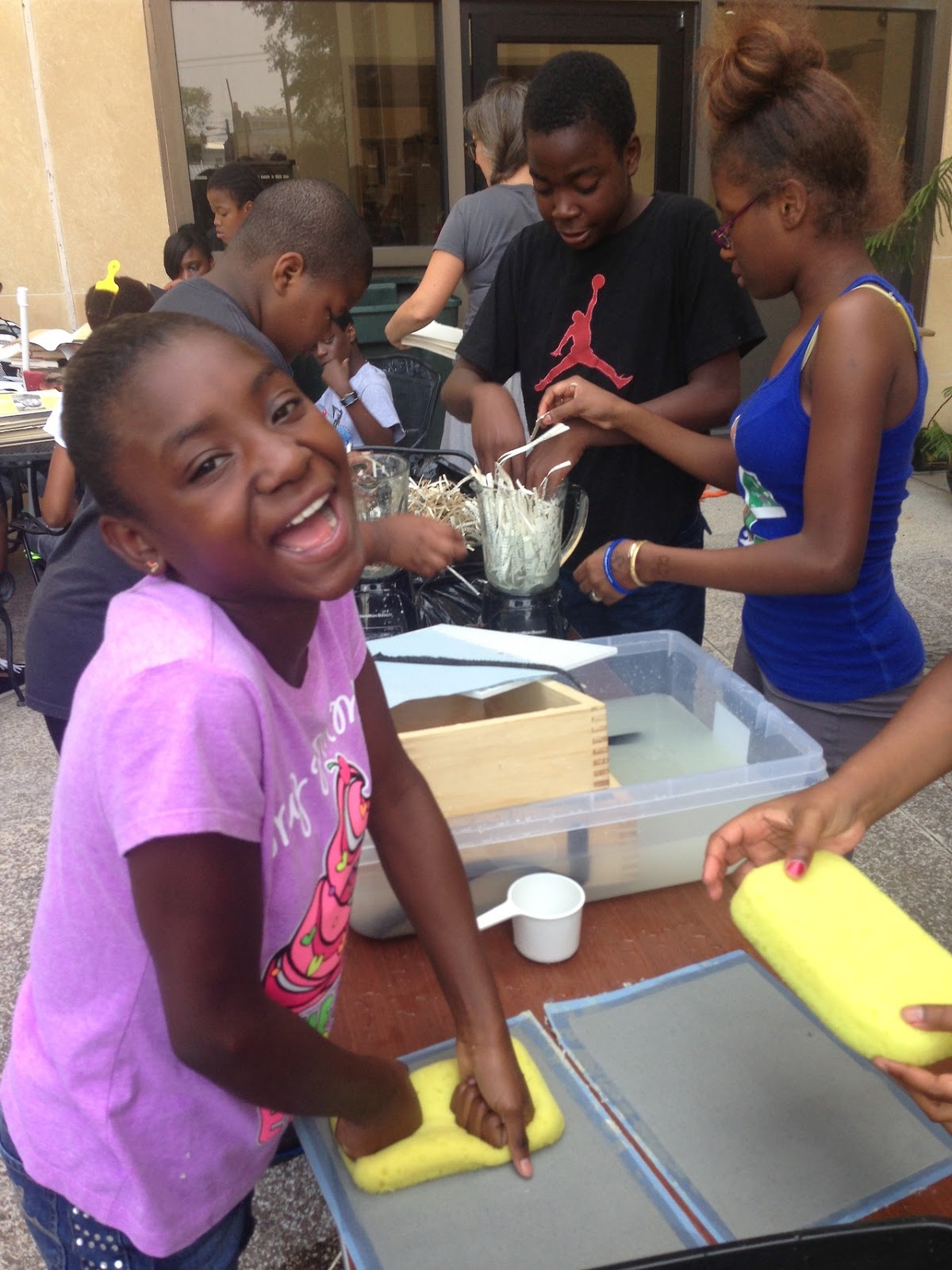
I had the pleasure of being present at one of the paper-making workshops with Mark and Courtney, and was impressed with their skill in working with young people.  So many pages were made, everybody had fun and got their hands dirty (almost everybody that is- I didn't want to stain my clothes, so I just took pictures!  Those are below).

Courtney and Mark were natural teachers.  I have witnessed their ability to articulate their project and its goals to children and adults alike, and this clarity and ease of expression, I think, underscores their passion and commitment to this project and the Richmond community.

So again - please join us this Friday 9/20 for the opening of the People's Library Project.  And stay tuned for more People's Library programming this November at Richmond Public Library!


Friday, March 30, 2012

UNPACKING THE 2010 CENSUS: New Realities of Race, Class, and Jurisdiction

Join us at the RPL Main Library on Wednesday, April 11, 6:30 - 8:30 for Unpacking the 2010 Census: New Realities of Race, Class, and Jurisdiction. This program will help us examine the dramatically changing landscape of human needs and what we must do collectively to address the plight of our neighborhoods and to build a just and inclusive community. The Unpacking the 2010 Census program was conceived, researched and designed by Dr. John V. Moeser, a renowned urban planning expert, Senior Fellow at the Bonner Center for Civic Engagement at the University of Richmond, and a member of the Hope in the Cities Council.

In March of 2011, Richmond Mayor Dwight Jones launched his anti-poverty commission to focus on employment, education, transportation, and health.  Heroic efforts are being made by countless volunteers to address the consequences of our unequal systems, but as yet there has been no deliberate attempt to educate people on the underlying causes and alter the basic structures that would enable Richmond area residents to move out of poverty.

The Census project is presented in partnership with the Virginia Center for Inclusive Communities and is supported by a grant from The Community Foundation.

The project aims to:
-Provoke long-needed discussion about new policy options to address poverty and structural inequity in the region. The disparities in public education, access to transportation, healthcare, and affordable housing are rooted in the structures of our economic and political systems, and their historical context.
-Educate people on the underlying causes. This approach is unique in that it highlights the role that history has played in the current situation, and how we all have the power to make history ourselves, by taking action now to alter the basic structures that would enable Richmond area residents to move out of poverty.
-Create a grassroots domino effect where those who have taken part in a facilitated discussion will be empowered to share what they have learned with others in the community.

We want as many voices as possible in these discussions! Please call and reserve a space for what promises to be a rigorous and enlightening evening: 804-646-7223