Showing posts with label travel. Show all posts

Thursday, November 17, 2016

Looking to leave town for a while? Why not take a trip to one of these fictional dystopias!


Visit One World!

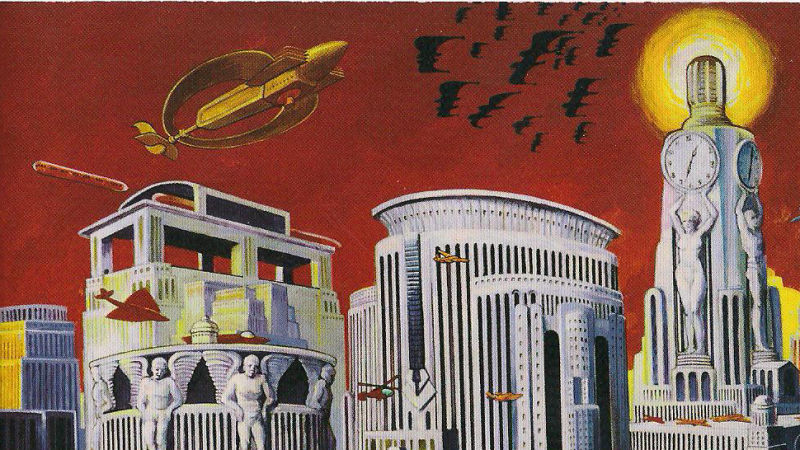
Take a trip to sunny One World! Surrounded by a Big Green Wall and encased in glass, you won't have to worry about privacy, dreams, agency, or individuality in this beautiful panopticon. Leave your troubles at the door and conform because the state decides, and the state is watching!
Check out We by Yevgeny Zamyatin, a classic of early Soviet Science Fiction published in 1921.


Visit London in the 1990s!

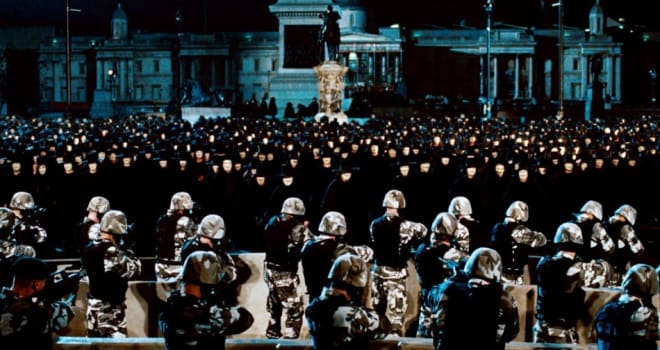
Escape the fallout of global nuclear war in an exciting, post-apocalyptic London under the control of fascist government, Norsefire. Frequent attacks by anarchist revolutionaries keep things interesting!
Check out V for Vendetta by Alan Moore and David Lloyd, first published in Warrior, in 1982.
Visit Airstrip One!

This province of Oceania is in a state of perpetual war, careful censorship, and government surveillance. And that's just great! Because "War is peace. Freedom is slavery. Ignorance is strength". Your strictly circumscribed existence will be hassle-free as long as you play by the rules. Enjoy!
Check out 1984 by George Orwell, written in 1949.


Visit the Republic of Gilead! 

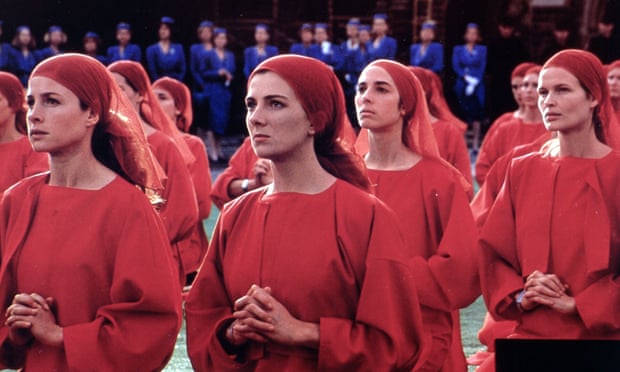
Relax within the closed borders of this near-future totalitarian theocracy. Women, take it easy. You will be sorted into one of 6 clearly defined roles making this vacation truly worry-free. The mandatory color-coded robes are on the house! And leave your books at home, ladies. You're not allowed to read. 
Check out A Handmaid's Tale by Margaret Atwood, written in 1985.


Visit The World State!

Accept your station in life under this benevolent dictatorship. Throw off the shackles of critical thinking and reproduction. It's all taken care of--and try the Soma! According to one Yelp reviewer:"All the advantages of Christianity and alcohol; none of their defects."

Check out Brave New World by Aldous Huxley, written in 1931.

Visit Panem!

Grab the kids and get right into the action of reality television. You can even win fabulous prizes! Survivors eat free in the Capitol.

Check out The Hunger Games trilogy by Suzanne Collins

Or...
Happy Trails!

Friday, July 10, 2015

Looking to get the most out of your travels this summer? Try a taking a literary tour!

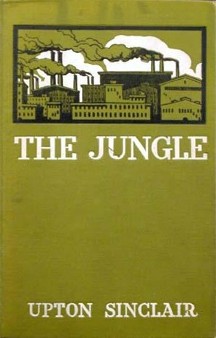
Often the setting of a novel is as important to the story as any of the characters. This is quite true in the case of the Chicago of The Jungle.Years ago, just for grins, I went on a self-guided tour of Upton Sinclair's Chicago--specifically through the meat packing district. The idea of immersing myself in the setting of a book that was so richly detailed in the text was a thrill. It wasn't a long tour as it isn't a big area but even as it has clearly been cleaned up (one would not want to spend much time in Sinclair's meat packing district at the turn of the last century) one can still see the streets and buildings, smell the smells, and hear the activity of Chicago's still functioning meat packing district...though maybe that experience isn't for everybody.

Let's journey a few thousand miles further to Istanbul, Turkey, the setting of, and major character in, Orhan Pamuk's romantic and deeply immersive literary and art experience:

The Museum of Innocence and The Innocence of Objects by Orhan Pamuk

The golden ticket!
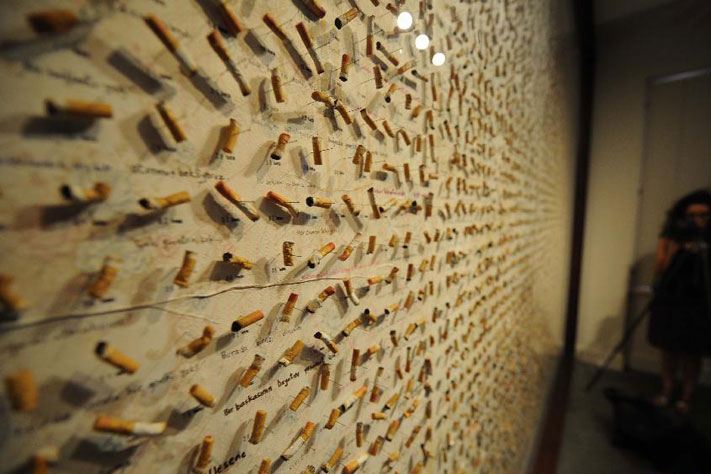
Kemal, the wealthy scion of a prominent Istanbul family and engaged to marry the similarly wealthy Sibel, unexpectedly reunites with his childhood friend Füsun while she is working in a shop. Though from different classes and different worlds, of course they embark on a devastating love affair. Over the course of his decades long obsession, Kemal collects thousands of small objects that remind him of moments he spent with Füsun and assembles them into a museum. Many of the objects are stolen from her, many are simply discarded waste that he pockets (over 4,000 carefully documented cigarette butts make up the first exhibit in the museum), and many items are donated by her family to his museum.
Sunset on the posh streets of Beyoğlu, where Kemal roamed

In the ultimate blurring of fact and fiction, author Orhan Pamuk built a really real museum, based on the novel, in the really real neighborhood where fictional Füsun's family lived. He built the museum faithfully to his own description in the book which was written as if by fictional Orhan Pamuk, supporting character, friend and confidant of fictional Kemal. Lost yet? Good!  Get lost in the book and cross over into the surreal and awesome experience of walking in a beloved fictional character's footsteps. Think Harry Potter world, only instead of wizards and magic we have a bittersweet love story for grown-ups. At the museum one can examine Füsun's dresses, butterfly earrings (even buy a pair in the gift shop!), her movie ticket stubs, dozens of small ceramic dogs (my favorite case), other pilfered trinkets, and the aforementioned lovingly described 4,213 cigarette butts in a giant wall case--complete with her shade of lipstick dotting the ends. The Innocence of Objects, a third work in this experience is the gorgeously photographed and beautifully written exhibit catalog. Once you fall in love with The Museum of Innocence, check out the exhibit catalog, The Innocence of Objects, and fall in love again. Then plan your trip to Istanbul and prepare to be amazed.

For the full experience I recommend reading both of these books and then going to the museum. (The only thing possibly missing is a film version of the book but I have no idea if one is on the way.) When you go, bring The Innocence of Objects with you, or pay the extra 10 Turkish Lira for the audio tour--otherwise you will have to rely on memory as there is very little text in the museum to remind you of what the assembled items in each case represent. Though they are an impressive collection of Turkish culture and do stand on their own as a work of art one can enjoy without even having read the novel. Photography is absolutely NOT allowed in the museum, so here are some pictures I took:
The line between fact and fiction delightfully blurred in Kemal's bedroom installation
Manuscripty!
The cigarettes! I borrowed this photo from the internet because the guard could see me trying to sneak a photo. First rule of literary traveling: Don't get kicked out!
For a little background on why he did this, click here for Orhan Pamuk's Manifesto for Museums.

From the city we journey to the countryside with Memed, My Hawk by Yaşar Kemal.

Published in 1951, Yaşar Kemal's debut novel set in a remote mountain village in Eastern Turkey follows the life of Slim Memed from abused and exploited child working for a cruel landlord to legendary avenging brigand. The novel describes in great detail the setting--the mountains, small villages, and the eerily beautiful but brutal thistle fields of rural Anatolia are essential to the development and actions of the characters. I bought this book in the airport in anticipation of an excruciatingly long layover and selected it for the contrast of hiking rural Anatolia after the very urban experience of reading Pamuk in Istanbul. Books have a way of taking you there, and taking you back. Before Istanbul we rented a car and drove through the countryside to an inn near Midas City (Midas Han, if you find yourself off the beaten path, is pretty much the best thing ever) to hike around the remains of the Phrygian kingdom, which lasted from about 1200 to 700 BC and was home to the Gordias and King Midas. The mountains, the villages, and the brutal fields of thistles, were there just as described in Memed, My Hawk, as well as some amazing hiking around really cool tombs and monuments.

The Ataturk airport bookstore's "Turkish Interest" section
A monument 
Phyrigian traffic jam
Tombs!
So just for fun in the comments, tell us your vacation destination (real or wishful thinking) and we will reply with a book recommendation to round out the experience. Bon Voyage!
Friday, August 15, 2014

What To Read Where

In his 2011 The Tao of Travel: Enlightenments from Lives on the Road novelist and travel writer Paul Theroux offered ten essential rules for encountering new places. The rules make useful advice for anyone taking advantage of the doldrums of August to seek out that bit of the state, country, or globe they haven’t sought out before. The eighth rule is especially essential since it hints at a quick stop at your local library before departing.

“8. Read a novel that has no relation to the place you’re in.”

Theroux explains that travel can be lonely enough and overwhelming enough for the traveler to need a break. A novel set in an entirely different place can be, said Theroux in an interview with Rick Steves, “a refuge.” Spend some time in Juneau and eventually you’ll need a break from all the new, Alaskan impressions. Madame Bovary then, and not The Call of the Wild, provides relief.

And with everything around you so different from everything on the page, the characters and settings in the novel will be all the more vivid. Read Madame Bovary in the French countryside and some of the details may pass you by. But read it in Juneau and every part of an opera in Normandy seems strange and wonderful. “Nothing is more memorable,” said Theroux, “than the novel you read in the very, very far away place.”

Here are five reading experiences I’ve had, and one I haven’t, that seem to follow the rule. I recommend all the books, some of the trips too.

This summer I had the fortune or misfortune of  spending a weekend in Las Vegas. My book of choice was Edgar Allan Poe’s The Narrative of Arthur Gordon Pym. When the Mojave Desert felt a bit too expansive, I could spend time with Arthur, trapped in the hold of a Nantucket whaling ship. When the 111 degree heat had me wanting to sit down, I could travel with Arthur to the South Pole.


Visiting a monastery in Charleston, South Carolina I brought along Murasaki Shikibu’s The Tale of Genji. Among the first novels ever written, Genji is Buddhist where the monastery was Catholic, opulent where the monastery was humble, and full of romance and intrigue where the monastery was at least not visibly either.


On a pilgrimage to Flannery O’Connor’s home in Milledgeville, Georgia I decided not to go the obvious route and instead brought along Patricia Highsmith’s The Talented Mr. Ripley. While Ripley might be bloody enough for O’Connor’s tastes, there are no farmhouses here, only well-dressed cosmopolitans shuttling across Italy.


This could probably be flipped around. O’Connor once famously said, “When in Rome do as you done in Milledgeville.” Why not take this almost literally and read Wise Blood at the Trevi Fountain, A Good Man is Hard to Find at the Pantheon, or Everything That Rises Must Converge at the Spanish Steps? 


And the experience that started off this whole bizarre practice: reading Paul Theroux’s The Great Railway Bazaar on an Amtrak from New York to Pittsburgh. Granted, Theroux and I were both on trains, and The Great Railway Bazaar is a travel book and not a novel, but the juxtaposition of fiction and reality was exactly as Theroux later recommended in The Tao of Travel. In my hands I had India, Iran, and China, and out the window: Altoona.

Saturday, March 30, 2013

Glamping this summer? Let RPL and Mango help!


"Cat selfies?  Have we no shame?"Just sitting there at your computer, wishing this winter would stop already, endlessly scrolling through dream vacations you can’t afford to take? Or are you just staring at cat pictures on Buzzfeed?  It’s ok.  RPL wants to help.  I’m going to let you in on a couple of secrets that just might save Spring, Summer, and your sanity. Ready?

Glamping:  A word combining “glamour” and “camping” is apparently a thing that people do according to this article in the New York Times.  Reportedly a more luxurious way of “roughing it”, it can range from a $10/night stay in a VW minibus in Charlottesville, to a $1726/night stay at the “Four Seasons Tented Camp at Golden Triangle” in Thailand and, as you may have guessed, there are plenty of websites to get you on your way.  Fear not, I’m going to stay closer to the $10 side of things for this post. This all started when I stumbled upon the glamping wishlist on Airbnb.com and with some further Googling discovered some really affordable places to stay all over Europe.  I found a $27 a night Tipi in Huetor de Santillan, Spain, a $20 a night stay on a campsite farmhouse in Perugia, Italy, and my own personal favorite, A “Summer Home for Hobbits” just outside of Helsinki, Finland, for $54 a night.  In addition to brushing up on my Russian and learning a little Korean, I may have to add Finnish to the list so that I can chat over fresh donuts with Maija, the allegedly quirky owner of the little café about a 10km walk through the woods from the Hobbit house.  


Armed with little more than some pluck, a sense of adventure, and your library card to access Mango, you could go anywhere and feel right at home under the stars or in slightly more plush digs.  Just visit Richmondpubliclibrary.org and under the Find Information menu, click “online library” and scroll down to Mango Langues.  You can learn a whole bunch of languages, fast, fun and completely free!


Not in the mood to glamp but feel like charging a bunch of globetrotting strangers 15 bucks to sleep in your backyard this summer?  Check out Backyard Structures and How to Build Them by Monte Burch or How to Build Treehouses, Huts & Forts by David Stiles, both freshly shelved at Ginter Park!


Just want to travel through the pages of a book?  These are a few that have transported me: Earlier this year Museum of Innocence by Orhan Pamuk took me to Istanbul in the 70s (I could learn Turkish too!); Midnight in the Garden of Good and Evil by John Berendt is one of my all-time favorite reads; A Walk in the Woods by Bill Bryson took me on the Appalachian Trail (without actually having to go there and for that I am grateful); West of Here by Jonathan Evison looks promising so I’ll add it to my wishlist (I’ve been meaning to get back out West).