Showing posts with label library collection. Show all posts

Friday, April 19, 2013

Readings for the end of the world

Do you DIY? Are you frugal? Maybe even thrifty? Are you prepared for anything? Even zombies? I know what you’re probably wondering. “But Natalie, why am I doing all of this canning when I could be on the beach? I mean, the world is probably going to end soon in some calamitous meteor strike or zombie plague and I can’t take it with me. Right?”

You couldn’t be more wrong.

What if you’re the only one left? Do you have enough canned goods? Can you sew a gown out of a tarp? Brew your own beer or gasoline?

These are the kinds of things I ponder while shelving, especially when I come across books like Be Thrifty, a compact yet surprisingly heavy handbook with a place for a (now pilfered) penny on the cover. The front of Be Thrifty: How to live better with less warns readers against being “cheap”, but I wonder where that line is? Could it be cheap (and a little paranoid) to consider this book an excellent bargain because 1) It totally doubles as a post-apocalyptic preparedness manual and 2) I checked it out at the library FOR FREE?

NO.

The book covers a lot more than just the DIY aspects of budget-wariness, such as picking good cheap wines, but since currency will be squirrel pelts and juice boxes when the world ends we’ll focus on DIY and leave the coupons for another day. So I got to searching the shelves for other handy references for the end of the world (or weekend projects) and it turns out that there is a do-it-yourself guide for literally (yes, literally) everything so I picked a few to share and tossed in some of my favorite “end of the world as you know it (and I feel fine)” reads for good measure. What a bargain!

Surely this isn’t cheap! This is just plain industrious. And fabulous! (Full disclosure: I have been making my own clothes for years.)
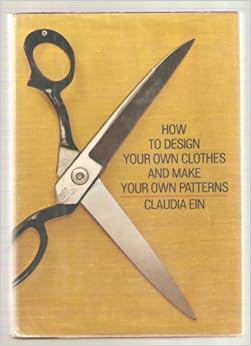
How to design your own clothes and make your own patterns (1975)

This?  Not a chance.  Makeup, lotions, cleansers and such are pricey while many of these recipes have about 4 little ingredients.  They even have a recipe for henna hair dye.
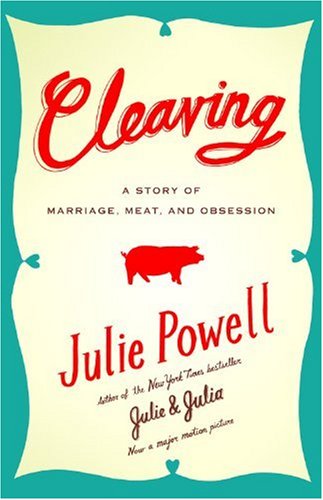
Home butchering?  Julie Powell got her hands...meaty?  yeah, meaty, for you. Remember folks, it’s just going to be you and the squirrels...  
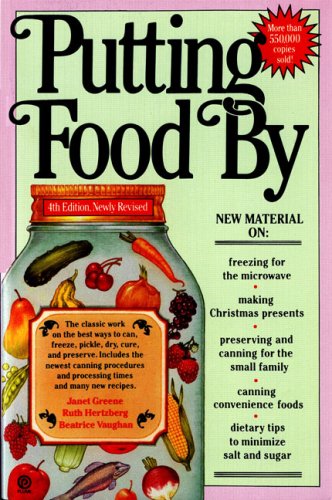

Can it, freeze it, pickle it, you get the idea:
Greene, Janet C.

Maybe it’s not too late to save the planet?  



DIY Doctor? The doctor is in...YOU? Last man on earth, heal thyself? I hope you have plenty of sterile gauze!

Doctor yourself : natural healing that works

Also, don't forget that Monday is Earth Day. There are so many ways we can reduce our impact on the environment and try to get a few more spins on this lovely planet of ours.
Or else...

Saturday, March 30, 2013

Glamping this summer? Let RPL and Mango help!


"Cat selfies?  Have we no shame?"Just sitting there at your computer, wishing this winter would stop already, endlessly scrolling through dream vacations you can’t afford to take? Or are you just staring at cat pictures on Buzzfeed?  It’s ok.  RPL wants to help.  I’m going to let you in on a couple of secrets that just might save Spring, Summer, and your sanity. Ready?

Glamping:  A word combining “glamour” and “camping” is apparently a thing that people do according to this article in the New York Times.  Reportedly a more luxurious way of “roughing it”, it can range from a $10/night stay in a VW minibus in Charlottesville, to a $1726/night stay at the “Four Seasons Tented Camp at Golden Triangle” in Thailand and, as you may have guessed, there are plenty of websites to get you on your way.  Fear not, I’m going to stay closer to the $10 side of things for this post. This all started when I stumbled upon the glamping wishlist on Airbnb.com and with some further Googling discovered some really affordable places to stay all over Europe.  I found a $27 a night Tipi in Huetor de Santillan, Spain, a $20 a night stay on a campsite farmhouse in Perugia, Italy, and my own personal favorite, A “Summer Home for Hobbits” just outside of Helsinki, Finland, for $54 a night.  In addition to brushing up on my Russian and learning a little Korean, I may have to add Finnish to the list so that I can chat over fresh donuts with Maija, the allegedly quirky owner of the little cafĂ© about a 10km walk through the woods from the Hobbit house.  


Armed with little more than some pluck, a sense of adventure, and your library card to access Mango, you could go anywhere and feel right at home under the stars or in slightly more plush digs.  Just visit Richmondpubliclibrary.org and under the Find Information menu, click “online library” and scroll down to Mango Langues.  You can learn a whole bunch of languages, fast, fun and completely free!


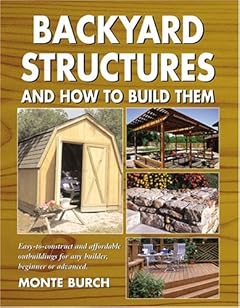
Not in the mood to glamp but feel like charging a bunch of globetrotting strangers 15 bucks to sleep in your backyard this summer?  Check out Backyard Structures and How to Build Them by Monte Burch or How to Build Treehouses, Huts & Forts by David Stiles, both freshly shelved at Ginter Park!


Just want to travel through the pages of a book?  These are a few that have transported me: Earlier this year Museum of Innocence by Orhan Pamuk took me to Istanbul in the 70s (I could learn Turkish too!); Midnight in the Garden of Good and Evil by John Berendt is one of my all-time favorite reads; A Walk in the Woods by Bill Bryson took me on the Appalachian Trail (without actually having to go there and for that I am grateful); West of Here by Jonathan Evison looks promising so I’ll add it to my wishlist (I’ve been meaning to get back out West).  


Friday, March 22, 2013

What's Cooking at Ginter Park?

My mother is a marvelous cook, the sort of cook who seems to have this preternatural sense of when something is “just right”, be it dough, broth, or batter.  I, on the other hand, need detailed directions with pictures or my mother a frantic phone call away talking me through her gravy recipe again.  I've been so envious of what has always seemed to be completely natural culinary instinct, which I did not inherit, but have realized it is actually the result of years of patient trial and error using cookbooks.  She still pulls out a Martha Stewart Living, or Artisan Breads in 5 Minutes a Day, or a well-worn 3x5 card penned in her neat script (something else I did not inherit) for a recipe she has been preparing for decades.  I can picture her cooking library lined up neatly on top of the pie safe.  I loved browsing their flour-dusted spines, pulling them off the shelf to look at the sumptuous images and reading the cryptic instructions to mince, temper, proof, etc. The thought came to me recently while I was shelving, as thoughts have a way of doing then, (trade secret: shelving can be a very meditative experience) that I should test-drive a handful of our wonderful collection of cookbooks available at Ginter Park to find my own flavor and to start compiling my own library of trusted recipes.  

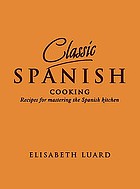
Classic Spanish Cooking: Recipes for Mastering the Spanish Kitchen by Elisabeth Luard
This book presents traditional Spanish recipes to perhaps more confident cooks than me.  The directions are minimal and seem to assume a lot of prior experience with the ingredients, such as the time and temperature requirements for  short grain rice. Still undaunted, (no, slightly daunted) I opted to try out the arroz a la cubana, or Cuban rice, recipe because I love fried plantains and I already had the tomatoes pureed. Ultimately it was simple enough and fortunately I’ve prepared risotto before, which operates similarly, so I could make educated guesses as to the missing directions.  The result was great!  It was rated quite highly by Peter, my taste tester, and seemed pretty healthy at least in keeping with the Mediterranean diet I have been reading so much about, so I would definitely incorporate this into my culinary repertoire and I will definitely try another recipe from this book.


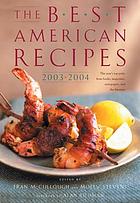
The Best American Recipes 2003-2004, ed. by Fran McCullough and Molly Stevens
This series compiles the most highly reviewed recipes each year from sources such as The New York Times and House BeautifulI love the little “cook’s notes” the editors add which are special caveats included with certain recipes.  I made a simple "escarole and little meatball soup" (minestra) because I love miniature things and "little meatballs" sounded a-dor-able. It was very easy and inexpensive, using ingredients I had on hand already, but it was a little spare in flavor, so perhaps it would be a good canvas for experimenting with seasonings. I liked it for the potential; Peter thought it was just OK. Alas, I am aware of my limitations and overall these cookbooks are great.

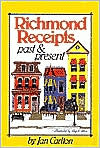
I am new in town from Cincinnati so I wanted to try something local and this certainly fit the bill. Intimidated by all the ways to prepare ham, I got cook-shy and ended up choosing a recipe for rice croquettes, sometimes called arancini, that looked like a simple way to use up leftover rice.  I opted to use some leftover risotto rather than the long-grain rice the recipe calls for, so I basically ignored the recipe completely but the result was every bit as good as I had hoped and the book itself is an informative collection of local culinary history and customs so it is well worth a read.  And anyway, the rice croquettes provided a nice side dish for the recipe I tried from the next book.

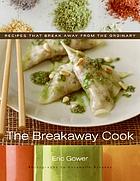
The Breakaway Cook by Eric Gower features beautifully photographed results of recipes with gorgeous, exotic, and sometimes difficult to find, ingredients.  I selected a recipe with a short ingredient list: the baked peas with tarragon, yogurt, and pistachios.  I found it to be fabulous and Peter agreed. With such fresh, light, and flavorful ingredients, (yogurt, tarragon, peas, pistachios, scallions and olive oil) it brought summer to mind, and then it snowed.  Spring is finally springing though and I am so ready to dine  outdoors again!  I will definitely be making this dish again.


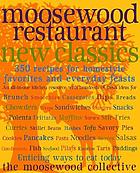
Moosewood Restaurant New Classics by the Moosewood Collective
My mother has a Moosewood cookbook, so this was sort of a nostalgia checkout for me; I can't walk past this book on the shelf without thinking of her.  Nobody does vegetarian cooking better than these guys, seriously.  Fare that can often be sad, bland veggies with under-heated grains is transformed into food so flavorful you won’t miss the meat.  I made the curried quinoa because it used up all the leftover peas from the recipe above.  It paired well with a leftover chorizo soup and some homemade bread. Hungry yet?  

Just think how extra great a home-cooked meal using your homegrown herbs this summer would be!  Maybe you should go sign up for the container gardening program at the Ginter Park branch, March 30th, to find out?