Showing posts with label collection development. Show all posts

Friday, May 20, 2016

Let's Zine About It!


Despite not being as prolific a zine-maker as my peers, I’ve been making zines for nearly a decade, and my mother and aunt still forget how to pronounce the word (like “magazine” without the “maga”), but I think they understand what zines are—hand-made pamphlets or “mini-books” or, if we go along with the idea of a magazine, imagine that by dropping the “maga,” you drop all of the superficial gloss, the hierarchy, the advertisers that twist your original voice, content, and intent into a game of survival for mass appeal.

Zines can contain anything from art to poems to collective histories to recipes and other do-it-yourself tips to ... REALLY ANYTHING. A zine can be about as much as everything or nothing that the zine-maker desires. A zine can be any size or any length or make use of different materials, although your basic 8.5x11 sheet of paper folded in half is the most common.

Making a zine can be a radical act even if the zine is about Taco Bell or haikus about your cat because in a world where everything is literally within the click of button and a few keystrokes, putting something in print still matters. That’s why zines attract a diverse group of makers and readers of all ages, backgrounds, and interests. And now you can access a small collection of zines at Richmond Public Library!

The RPL Zine Collection is currently housed in Ready Reference at the Main Branch, but they can be checked out and returned to the circulation counter at any of the branches.  All 78 issues are fully searchable via the library catalog.

1.  Go to the library website at richmondpubliclibrary.org. Perform a keyword search for "zine."

2. Browse the listing of zines. Each zine has been given a number starting with 101. If you spot one that interests you, click on the title in blue.


3. Once you click on the title, you'll see the following holding information. The zine number (in this case ZINE 176) is what you'll need when you request the zine for check-out.


4. To learn what the zine is about, you'll want to click on "Catalog Record." As you can see, this particular zine published in Richmond, VA, is one where you'll be sure to read some poems related to summer and self-discovery.


All of the zines currently in the RPL Zine Collection were donated at the 9th Annual Richmond Zine Fest in 2015. Thanks to supportive librarians at the full-day event, several zine exhibitors were thrilled to donate zines, so RPL could establish a zine collection that would allow library patrons to experience what zines can be and maybe even be inspired to make some of their own! Read some of the zines that were available last year, and join us for another free event where artists and writers will have their zines available for purchase, trades, or in some cases for free! This year, Richmond Zine Fest will be at the Main Branch of Richmond Public Library with exhibitors tabling all day Saturday, October 1st.

Friday, September 20, 2013

Banned Books Week | Celebrating the Freedom to Read

American Censorship
You may have heard in history class about Nazis burning books in Germany in the 1930s and 1940s.  Teachers and textbooks like to include that information to illustrate the repressive nature of the Nazi regime.  But did you know America has a long history of institutionalized censorship?

Many of the books that are now considered classics were challenged by censors for years after their publication, and many books are challenged today.  The Scarlet Letter, now required reading in many American middle and high schools, was censored heavily in its day and through the 20th century for being "pornographic and obscene."

Ernest Hemingway, now considered to be part of the vanguard of 20th century American literature, faced heavy censorship of his works during his lifetime.  Many of Hemingway's novels were banned by booksellers and schools.  The United States Post Office considered For Whom the Bell Tolls unsuitable to send through the mail because it contained “propaganda unfavorable to the state.”

Why is censorship dangerous?
Censorship in the United States highlights a fundamental contradiction of American society.  Though the country was founded on classical liberal ideals like freedom of expression and the marketplace of ideas, a deeply conservative vein also courses through America and demands that defined values be respected, promoted and protected.  Often, challenges to printed materials are motivated by good intentions: to protect people, and especially children, from potentially harmful material.  However, this need to protect our values becomes censorship if it becomes a call to ban books, or to otherwise silence voices.

The problem is this: the notion of established, accepted values that must be protected is typically a way to protect the viewpoints of the majority and the opinions of persons with power.  Censoring or silencing minority voices, controversial opinions, or unpopular views because they do not fit in with normative values not only deprives persons of free expression, but nullifies the freedom of the marketplace of ideas, excludes the values systems of minority groups and deprives minority groups of opportunities for empowerment through information.  Censorship can also have what is known as a "chilling effect," whereby persons begin to voluntarily censor their expression and information seeking because of a climate of restriction and fear.  Censorship based on values is an obstacle to social and political change, artistic advancement, intellectual freedom, and the right to information. 

Libraries, Values, and the Right to Information
Libraries are charged with providing communities with access to information.  Librarians are trained to select books for collections, preserve materials, and assist library users with information requests while remaining as neutral as possible toward materials and their contents.  Libraries provide access; they do not restrict it.  In the words of the American Library Association, while it is encouraged for people to "restrict what they themselves or their children read... they must not call on governmental or public agencies to prevent others from reading or viewing that material."

Values are important.  In libraries, we value neutrality, access, and intellectual and informational freedom.  Values held by individuals to guide their choices for themselves and their families are important.  But we cannot publicly mandate what individuals' values ought to be.  That is why public libraries emphasize neutrality  - so persons of all belief and value systems can access information of interest to them.  The goal is to exclude nothing, and therefore include everyone.

Banned Books Week is an annual awareness campaign from the American Library Association's Office for Intellectual Freedom.  More information can be found online at:  http://www.ala.org/bbooks/ and http://www.bannedbooksweek.org/

Saturday, May 25, 2013

Short stories for a long weekend


Hurry up and get your supplies today for the long weekend!  The library will be closed on Monday, May 27th in observance of Memorial Day.

Inspired by this postage stamp story, I thought I would suggest some of my favorite short reads for the long weekend ahead.

Though it appears to be entirely apocryphal, I still love the tale of how Hemingway allegedly won a bet by producing a story in 6 words: For sale: Baby shoes, never worn.  (Or something to that effect.  That’s the beauty of urban legends: they are so mutable.)  

Heckuva way to win a bar tab, sir.

Also along those lines is another favorite of mine, this time attributed to science fiction writer Frederic Brown:  The last man on earth sat alone in a room.  There was a knock on the door...


Always gives me chills, that one does.


That is the beauty of short stories, no?  They pull no punches.  They can leave the reader gasping in so few words. So here's a heap of some that have moved me in one way or another, in no particular order:


The Metamorphosis and Other Stories by Franz Kafka


The Lottery by Shirley Jackson


The Heart of Happy Hollow
by Paul Laurence Dunbar


Welcome to the Monkeyhouse
by Kurt Vonnegut
The Works of Edgar Allen Poe

Friday, April 19, 2013

Readings for the end of the world

Do you DIY? Are you frugal? Maybe even thrifty? Are you prepared for anything? Even zombies? I know what you’re probably wondering. “But Natalie, why am I doing all of this canning when I could be on the beach? I mean, the world is probably going to end soon in some calamitous meteor strike or zombie plague and I can’t take it with me. Right?”

You couldn’t be more wrong.

What if you’re the only one left? Do you have enough canned goods? Can you sew a gown out of a tarp? Brew your own beer or gasoline?

These are the kinds of things I ponder while shelving, especially when I come across books like Be Thrifty, a compact yet surprisingly heavy handbook with a place for a (now pilfered) penny on the cover. The front of Be Thrifty: How to live better with less warns readers against being “cheap”, but I wonder where that line is? Could it be cheap (and a little paranoid) to consider this book an excellent bargain because 1) It totally doubles as a post-apocalyptic preparedness manual and 2) I checked it out at the library FOR FREE?

NO.

The book covers a lot more than just the DIY aspects of budget-wariness, such as picking good cheap wines, but since currency will be squirrel pelts and juice boxes when the world ends we’ll focus on DIY and leave the coupons for another day. So I got to searching the shelves for other handy references for the end of the world (or weekend projects) and it turns out that there is a do-it-yourself guide for literally (yes, literally) everything so I picked a few to share and tossed in some of my favorite “end of the world as you know it (and I feel fine)” reads for good measure. What a bargain!

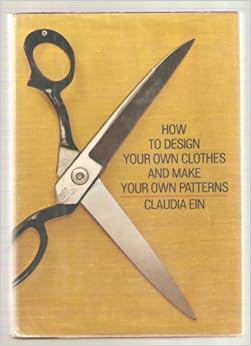
Surely this isn’t cheap! This is just plain industrious. And fabulous! (Full disclosure: I have been making my own clothes for years.)
How to design your own clothes and make your own patterns (1975)

This?  Not a chance.  Makeup, lotions, cleansers and such are pricey while many of these recipes have about 4 little ingredients.  They even have a recipe for henna hair dye.

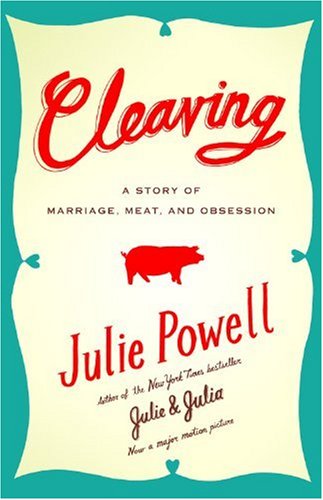
Home butchering?  Julie Powell got her hands...meaty?  yeah, meaty, for you. Remember folks, it’s just going to be you and the squirrels...  


Can it, freeze it, pickle it, you get the idea:
Greene, Janet C.

Maybe it’s not too late to save the planet?  


DIY Doctor? The doctor is in...YOU? Last man on earth, heal thyself? I hope you have plenty of sterile gauze!

Doctor yourself : natural healing that works

Also, don't forget that Monday is Earth Day. There are so many ways we can reduce our impact on the environment and try to get a few more spins on this lovely planet of ours.
Or else...

Friday, March 22, 2013

What's Cooking at Ginter Park?

My mother is a marvelous cook, the sort of cook who seems to have this preternatural sense of when something is “just right”, be it dough, broth, or batter.  I, on the other hand, need detailed directions with pictures or my mother a frantic phone call away talking me through her gravy recipe again.  I've been so envious of what has always seemed to be completely natural culinary instinct, which I did not inherit, but have realized it is actually the result of years of patient trial and error using cookbooks.  She still pulls out a Martha Stewart Living, or Artisan Breads in 5 Minutes a Day, or a well-worn 3x5 card penned in her neat script (something else I did not inherit) for a recipe she has been preparing for decades.  I can picture her cooking library lined up neatly on top of the pie safe.  I loved browsing their flour-dusted spines, pulling them off the shelf to look at the sumptuous images and reading the cryptic instructions to mince, temper, proof, etc. The thought came to me recently while I was shelving, as thoughts have a way of doing then, (trade secret: shelving can be a very meditative experience) that I should test-drive a handful of our wonderful collection of cookbooks available at Ginter Park to find my own flavor and to start compiling my own library of trusted recipes.  

Classic Spanish Cooking: Recipes for Mastering the Spanish Kitchen by Elisabeth Luard
This book presents traditional Spanish recipes to perhaps more confident cooks than me.  The directions are minimal and seem to assume a lot of prior experience with the ingredients, such as the time and temperature requirements for  short grain rice. Still undaunted, (no, slightly daunted) I opted to try out the arroz a la cubana, or Cuban rice, recipe because I love fried plantains and I already had the tomatoes pureed. Ultimately it was simple enough and fortunately I’ve prepared risotto before, which operates similarly, so I could make educated guesses as to the missing directions.  The result was great!  It was rated quite highly by Peter, my taste tester, and seemed pretty healthy at least in keeping with the Mediterranean diet I have been reading so much about, so I would definitely incorporate this into my culinary repertoire and I will definitely try another recipe from this book.


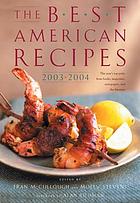
The Best American Recipes 2003-2004, ed. by Fran McCullough and Molly Stevens
This series compiles the most highly reviewed recipes each year from sources such as The New York Times and House BeautifulI love the little “cook’s notes” the editors add which are special caveats included with certain recipes.  I made a simple "escarole and little meatball soup" (minestra) because I love miniature things and "little meatballs" sounded a-dor-able. It was very easy and inexpensive, using ingredients I had on hand already, but it was a little spare in flavor, so perhaps it would be a good canvas for experimenting with seasonings. I liked it for the potential; Peter thought it was just OK. Alas, I am aware of my limitations and overall these cookbooks are great.

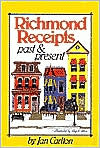
I am new in town from Cincinnati so I wanted to try something local and this certainly fit the bill. Intimidated by all the ways to prepare ham, I got cook-shy and ended up choosing a recipe for rice croquettes, sometimes called arancini, that looked like a simple way to use up leftover rice.  I opted to use some leftover risotto rather than the long-grain rice the recipe calls for, so I basically ignored the recipe completely but the result was every bit as good as I had hoped and the book itself is an informative collection of local culinary history and customs so it is well worth a read.  And anyway, the rice croquettes provided a nice side dish for the recipe I tried from the next book.

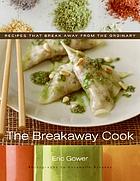
The Breakaway Cook by Eric Gower features beautifully photographed results of recipes with gorgeous, exotic, and sometimes difficult to find, ingredients.  I selected a recipe with a short ingredient list: the baked peas with tarragon, yogurt, and pistachios.  I found it to be fabulous and Peter agreed. With such fresh, light, and flavorful ingredients, (yogurt, tarragon, peas, pistachios, scallions and olive oil) it brought summer to mind, and then it snowed.  Spring is finally springing though and I am so ready to dine  outdoors again!  I will definitely be making this dish again.


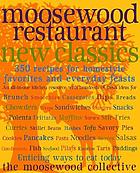
Moosewood Restaurant New Classics by the Moosewood Collective
My mother has a Moosewood cookbook, so this was sort of a nostalgia checkout for me; I can't walk past this book on the shelf without thinking of her.  Nobody does vegetarian cooking better than these guys, seriously.  Fare that can often be sad, bland veggies with under-heated grains is transformed into food so flavorful you won’t miss the meat.  I made the curried quinoa because it used up all the leftover peas from the recipe above.  It paired well with a leftover chorizo soup and some homemade bread. Hungry yet?  

Just think how extra great a home-cooked meal using your homegrown herbs this summer would be!  Maybe you should go sign up for the container gardening program at the Ginter Park branch, March 30th, to find out?